





What's Happening?
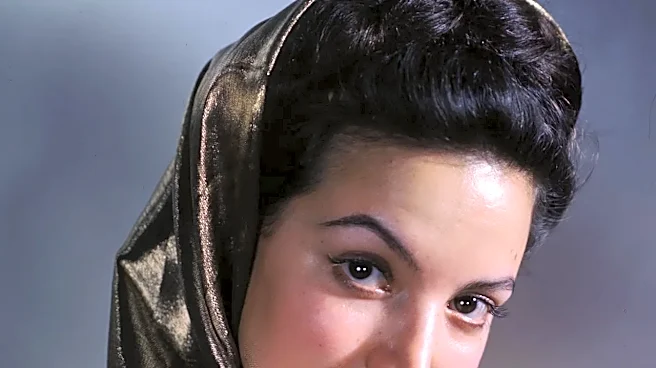
A new biography of Chinese American star Anna May Wong, titled 'Anna May Wong: An Intimate Portrait' by Shirley Jennifer Lim, recounts an alleged anti-Asian tirade by Marlene Dietrich during the filming of their 1932 movie 'Shanghai Express'. According
to Dietrich's daughter, Maria Riva, in her 1992 biography of her mother, Dietrich expressed disdain for Chinese people, stating, "If I see one more yellow face, I am going to throw up!" This incident reportedly occurred during a dinner conversation when 'The Good Earth,' a novel about China, was mentioned. Despite a 'fleeting friendship' between Dietrich and Wong on set, and Dietrich even making efforts to improve Wong's costume, Riva's account suggests a deeper prejudice. The biography highlights the professional disparity between the two actresses, with Dietrich earning significantly more than Wong for 'Shanghai Express,' reflecting the systemic racism Wong faced in Hollywood.
Why It's Important?
This revelation from the new biography sheds light on the historical context of racism within early Hollywood and its impact on minority actors like Anna May Wong. It underscores the institutional biases that limited Wong's career, despite her talent and the success of films like 'Shanghai Express.' While Dietrich's star rose, Wong, despite the film's success leading to more Chinese-themed movies, often saw white actresses cast in roles that should have been hers, such as in 'The Good Earth.' This narrative is important for understanding the challenges faced by non-white actors in an industry dominated by racial prejudice and unequal pay. It also contributes to the ongoing discussion about representation and the historical injustices within the entertainment industry, providing a critical perspective on the experiences of pioneering minority figures.
What's Next?
The publication of 'Anna May Wong: An Intimate Portrait' is likely to reignite discussions about Anna May Wong's legacy and the broader history of Asian representation in Hollywood. Biographies and historical accounts like this often lead to re-evaluations of historical figures and events, potentially prompting further academic research or public discourse on the systemic racism prevalent in early cinema. For the entertainment industry, this serves as a reminder of its past shortcomings and the continued need for diversity and equitable treatment. The book's release will allow a new generation to learn about Wong's struggles and triumphs, potentially inspiring further efforts to recognize and celebrate the contributions of marginalized artists.
Beyond the Headlines
The alleged incident goes beyond a simple personal slight, revealing the pervasive and often unacknowledged racism that shaped the careers of non-white actors in Hollywood. It highlights how even seemingly friendly professional relationships could be underpinned by deep-seated prejudices. The disparity in pay and opportunities between Dietrich and Wong, despite their shared screen time and talent, illustrates the systemic nature of discrimination. This historical context is crucial for understanding contemporary issues of representation and equity in media. It also prompts reflection on how historical narratives are constructed and the importance of diverse voices in recounting history, ensuring that the experiences of those like Anna May Wong are not overlooked or minimized.