





What's Happening?
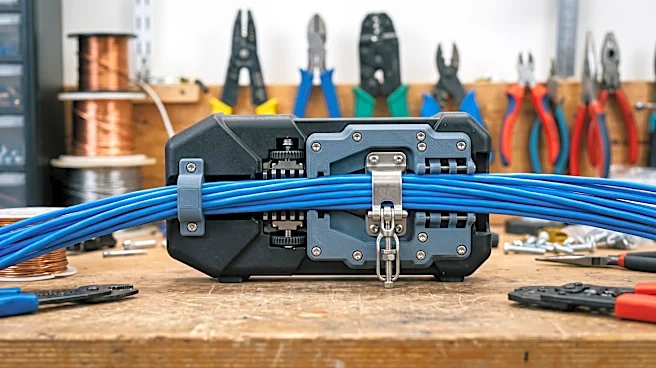
A contractor, known as Analytical Horsepower on YouTube, has engineered a portable tool to untwist Cat6 Ethernet cables more efficiently. This innovation arose from a project requiring the creation of 50,000 custom Cat6 cables, necessitating 100,000 terminations.
Initially, the contractor used a large, industrial 'Wire Straightening Machine' purchased from Alibaba. However, this machine proved too bulky and required an AC power source and compressed air, making it unsuitable for field use. To address this, he modified the industrial machine to be portable by replacing its power source with a 20V DeWalt battery and incorporating a portable bike pump for compressed air. Further refinement led him to develop a more compact and precise tool by modifying a Milwaukee Hackzall. This custom-built device, incorporating 3D-printed parts and a toggle clamp, can untwist softer copper-clad aluminum cables in under two seconds, significantly reducing labor time for large-scale cabling jobs.
Why It's Important?
This contractor's invention addresses a significant pain point in large-scale network infrastructure deployment: the time-consuming and repetitive task of untwisting Ethernet cables. For projects involving tens of thousands of cable terminations, the manual process can accumulate hundreds of hours of labor. By automating and speeding up this process, the portable untwisting machine can lead to substantial cost savings in labor and project completion times for businesses and contractors in the telecommunications and IT sectors. The use of readily available tools like the Milwaukee Hackzall, combined with 3D-printed custom parts, showcases the potential for grassroots innovation to solve practical industry challenges. This development highlights the value of portable, efficient tools in field operations, where space and power sources can be limited, ultimately improving productivity and profitability for U.S. contractors and network installers.
What's Next?
The contractor's portable Ethernet untwisting machine, while a significant improvement, is considered a first-generation tool. Future developments could involve incorporating suggestions from commenters, such as extending the toggle clamp handle to reach the trigger for easier activation. There is also potential to integrate the untwisting mechanism directly into a crimper, further streamlining the cable termination process. While this tool is highly beneficial for large-scale projects, its utility for smaller jobs, involving only a few Ethernet cables, is limited. The innovation demonstrates a growing trend of leveraging accessible technologies like 3D printing and off-the-shelf power tools to create specialized solutions for niche industrial problems. The success of this custom tool could inspire other contractors and small businesses to develop their own bespoke solutions, fostering a culture of practical innovation within various trades.
Beyond the Headlines
This story goes beyond a simple tool modification; it exemplifies the spirit of American ingenuity and problem-solving in the face of practical challenges. The contractor's journey from identifying a bottleneck in his workflow to designing and fabricating a custom solution using readily available technology underscores the power of individual innovation. It highlights how 3D printing, often associated with high-tech industries, is becoming an accessible tool for everyday problem-solving and small-scale manufacturing. This approach democratizes innovation, allowing individuals to create specialized tools that might not be commercially viable for large manufacturers but are invaluable for specific tasks. The story also subtly touches upon the challenges faced by contractors in managing large projects efficiently and the continuous search for methods to reduce labor costs and improve productivity in a competitive market.