





What's Happening?
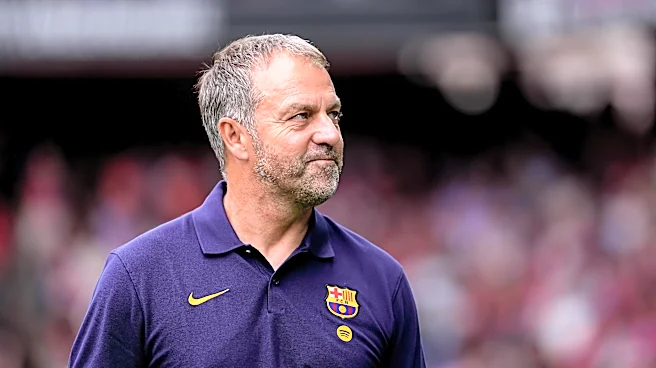
FC Barcelona coach Hansi Flick has reportedly decided against appointing Frenkie de Jong as a captain for the upcoming season, opting instead for Raphinha, Pedri, Gavi, and Eric Garcia. This decision comes despite de Jong having been the third captain last
season. According to Spanish radio station Cadena SER, Flick's dissatisfaction stems from de Jong's handling of a knee injury. The coach was reportedly displeased that de Jong played for the Dutch national team during the World Cup while injured and only informed Barcelona about his complaints after his vacation. De Jong recently gave an extensive interview about his injury, and his return date remains uncertain.
Why It's Important?
This development highlights the critical importance of player-club communication and adherence to medical protocols, especially for high-profile athletes. Flick's decision to remove de Jong from the captaincy, a leadership role, signals a strong message about professional responsibility and trust within the team. For Barcelona, maintaining squad discipline and ensuring players prioritize club health is crucial for competitive success. The incident could impact team morale and the perception of de Jong's commitment, potentially affecting his long-term standing at the club. It also underscores the challenges coaches face in managing player welfare, particularly when national team duties intersect with club responsibilities, and the potential for conflict when these are not aligned.
What's Next?
De Jong's immediate focus will be on his recovery and rehabilitation to return to full fitness. His performance upon return and his ability to regain Flick's trust will be crucial for his future at Barcelona. The club will likely monitor his progress closely and ensure strict adherence to medical guidelines. The captaincy decision could also influence team dynamics, with Raphinha and the other appointed captains stepping into more prominent leadership roles. This situation may also prompt Barcelona to review its policies regarding player injury management and communication, especially concerning international duties, to prevent similar issues in the future. The long-term implications for de Jong's career at Barcelona will depend on how he navigates this period.
Beyond the Headlines
This incident delves into the complex relationship between professional athletes, their clubs, and national teams, particularly concerning injury management. It raises ethical questions about a player's obligation to their club versus their national team, and the potential consequences when these loyalties clash. The coach's firm stance reflects a broader trend in elite sports where clubs are increasingly asserting control over player health and fitness, given the significant investments they make. Furthermore, the public nature of this decision, reported by a major Spanish radio station, highlights the intense scrutiny and pressure faced by top-tier football players and coaches. This event could serve as a cautionary tale for other players and clubs regarding transparency and responsibility in injury reporting and management.