





What's Happening?
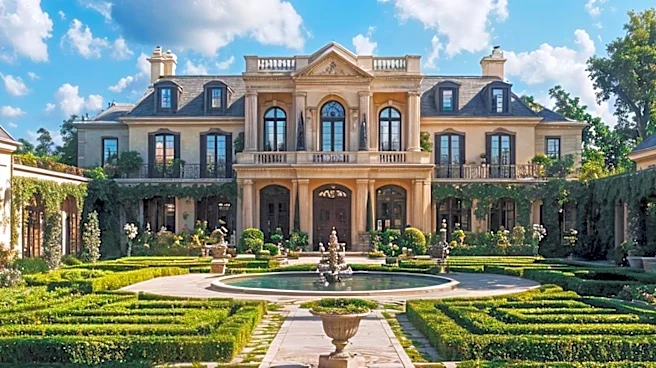
A newly constructed luxury mansion in Boca Raton, Florida, known as Villa Amalfi, has been listed for sale at $11.5 million. The property is distinguished by a 125-year-old olive tree imported from California, which is set in a reflective pool at the
center of the home. This feature is part of a broader design that emphasizes wellness and tranquility, incorporating Balinese influences and extensive use of glass to blend indoor and outdoor spaces. The mansion spans 11,186 square feet and includes six bedrooms, 7.5 bathrooms, and a range of luxury amenities such as a state-of-the-art kitchen and a spacious primary suite. The property is located in the prestigious Estates neighborhood, offering proximity to the beach and local attractions.
Why It's Important?
The listing of Villa Amalfi highlights a shift in the luxury real estate market towards properties that prioritize wellness and a connection to nature over traditional opulence. This trend reflects changing buyer preferences, with increasing demand for homes that offer a sense of peace and well-being. The inclusion of features like the ancient olive tree and the home's design focus on natural light and open spaces are indicative of this new direction. This shift could influence future developments in luxury real estate, as developers and architects may increasingly incorporate elements that promote mental and physical health.
What's Next?
As the luxury real estate market continues to evolve, properties like Villa Amalfi may set a precedent for future developments. Potential buyers interested in wellness-focused homes could drive demand for similar properties, encouraging more developers to adopt these design principles. The sale of Villa Amalfi will be closely watched as an indicator of market trends and buyer interest in wellness-oriented luxury homes. Additionally, the property's success could influence the broader real estate market in Boca Raton and similar affluent areas.
Beyond the Headlines
The emphasis on wellness and nature in luxury real estate could have broader cultural implications, reflecting a societal shift towards valuing mental health and sustainable living. This trend may also impact urban planning and community development, as more people seek environments that offer tranquility and a connection to nature. The integration of natural elements in home design could become a standard expectation, influencing architectural practices and consumer preferences across various market segments.