






What's Happening?
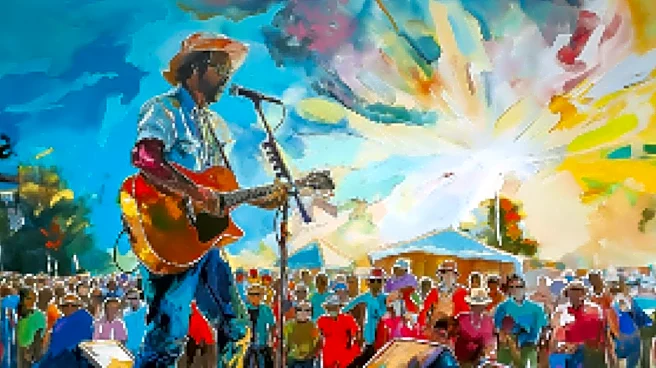
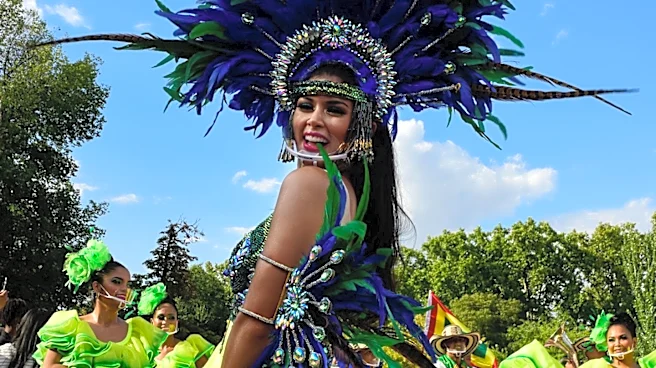
In South Los Angeles, a vibrant Juneteenth celebration took place at artist Lauren Halsey's newly opened sister dreamer sculpture park. The event featured a block party atmosphere with music, dance, and food, drawing a diverse crowd of locals and visitors.
A highlight of the day was an attempt to break the Guinness World Record for the longest Soul Train line, which brought hundreds of participants together in a joyful dance. The celebration was marked by a sense of community and cultural pride, with attendees enjoying performances, art installations, and a variety of cuisines. The event was open to all, but it particularly attracted an artistically inclined audience, eager to engage with Halsey's Afrofuturist sculptures and installations.
Why It's Important?
This Juneteenth celebration underscores the significance of cultural events in fostering community spirit and preserving historical memory. By hosting the event at a public art space, it highlights the role of art in community engagement and cultural expression. The attempt to break a world record for the longest Soul Train line not only aimed to make history but also served as a symbol of unity and celebration of Black culture. Such events contribute to the broader recognition and appreciation of Juneteenth as a federal holiday, promoting awareness and understanding of its historical importance across diverse communities.
What's Next?
Following the success of this event, there may be increased interest in similar community-driven celebrations that combine art, culture, and history. The positive reception could encourage more public art projects and cultural events in South Los Angeles and beyond, fostering greater community involvement and cultural exchange. Additionally, the attempt to break the Guinness World Record may inspire future efforts to set new records, further promoting community participation and cultural pride.
Beyond the Headlines
The event at Lauren Halsey's sculpture park highlights the potential for public art spaces to serve as hubs for cultural and community activities. By bringing art into accessible public spaces, it challenges traditional notions of art consumption and encourages broader public engagement. This approach can lead to a more inclusive cultural landscape, where art is integrated into everyday life and accessible to all, regardless of socioeconomic status.