







What's Happening?
The automotive industry is increasingly leveraging predictive data analysis to enhance various aspects of its operations, moving beyond traditional historical reporting. This advanced analytical approach combines historical and current data with statistical
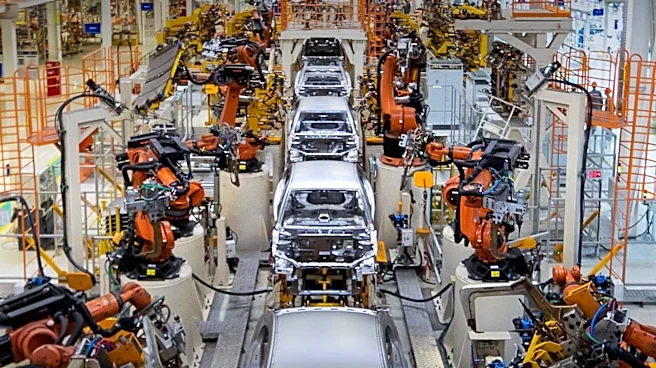
algorithms and machine learning to forecast future trends and events. Within automotive manufacturing, predictive analytics is being applied to anticipate potential equipment failures, identify quality issues before they become widespread, and optimize production planning. For instance, by analyzing machine readings, maintenance records, and operating conditions, manufacturers can detect changing behavior in equipment that may indicate an increased risk of failure, allowing for proactive maintenance. This shift enables companies to transition from understanding 'what happened' to predicting 'what is likely to happen,' thereby improving responsiveness and strategic decision-making across the value chain, from production to customer service.
Why It's Important?
The integration of predictive data analysis is crucial for the U.S. automotive industry as it faces complex manufacturing processes and a highly competitive global market. By anticipating issues like equipment downtime or quality defects, manufacturers can significantly reduce production losses, minimize waste, and improve overall efficiency. This proactive approach leads to substantial cost savings and enhanced product reliability, which directly benefits consumers through higher quality vehicles and potentially lower maintenance costs. Furthermore, predictive analytics extends to understanding customer behavior and optimizing supply chain management, allowing U.S. automotive companies to better meet market demands and strengthen their competitive edge. The ability to make data-driven decisions based on future predictions rather than past events is vital for sustained growth and innovation in this capital-intensive sector.
What's Next?
The automotive industry is expected to further integrate predictive analytics into more sophisticated applications, particularly with the rise of connected vehicles. As vehicles generate vast amounts of data from their networked systems and sensors, this information will be increasingly analyzed to provide insights into vehicle usage, driver behavior, and maintenance needs. This will enable the development of usage-based services and more precise maintenance scheduling. The challenge lies in effectively connecting diverse data sources, ensuring data quality, and translating complex analytical models into actionable insights for decision-makers on the shop floor and throughout the organization. Future developments will likely focus on refining these analytical capabilities and fostering a deeper understanding of data management and integration within automotive companies to maximize the value derived from predictive models.
Beyond the Headlines
The widespread adoption of predictive data analysis in the automotive sector highlights a broader trend towards data-driven decision-making across all industries. This shift raises important considerations regarding data privacy, especially as more vehicle data is collected and analyzed. Ethical implications surrounding the use of personal driving data and the potential for algorithmic bias in predictive models will become increasingly relevant. Moreover, the reliance on advanced analytics necessitates a skilled workforce capable of developing, implementing, and interpreting these complex systems, underscoring the growing demand for data scientists and analysts. The long-term impact could see a transformation in how products are designed, manufactured, and serviced, moving towards highly personalized and predictive experiences, fundamentally altering the relationship between consumers and automotive companies.