



What's Happening?
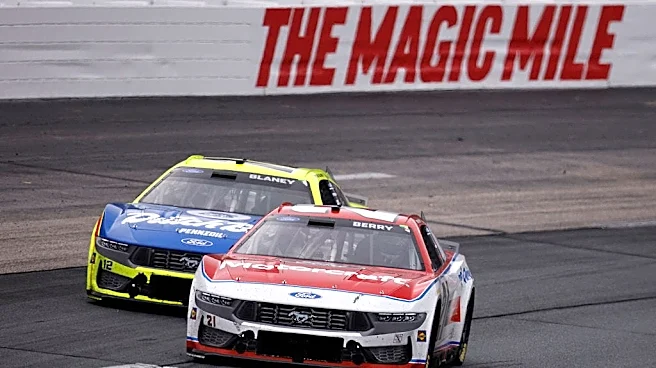
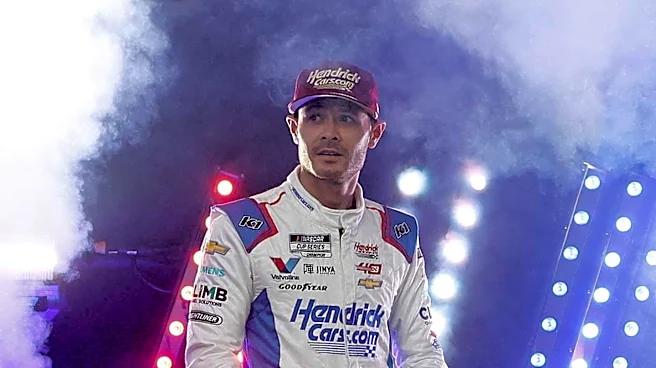
NASCAR driver Kyle Larson has publicly accused fellow driver Carson Hocevar of deliberately engaging in theatrical behavior, specifically citing a pre-race spin at New Hampshire Motor Speedway, to gain media attention. Larson, a two-time Cup Series champion,
expressed his belief on the 'Door Bumper Clear' podcast that Hocevar's actions, including the spin during pace laps due to rain, were '1000% just to get on TV.' This sentiment was echoed by co-hosts of the podcast. Larson acknowledged Hocevar's talent, even calling him 'maybe the most talented out there,' but criticized what he perceives as a shift in Hocevar's racing style, suggesting it's now more about performance for the cameras than genuine racing. The incident at New Hampshire led to other drivers, such as Joey Logano, labeling Hocevar an 'idiot' over team radio. Larson also referenced another instance at Iowa where Hocevar allegedly tried to 'spear' Christopher Bell after being lapped, further indicating a pattern of behavior he views as attention-seeking.
Why It's Important?
This accusation from a prominent figure like Kyle Larson highlights a growing concern within NASCAR regarding driver conduct and the potential for actions driven by a desire for media exposure rather than pure competition. If drivers are perceived to be staging incidents or engaging in overly aggressive maneuvers for attention, it could impact the integrity of the sport and fan perception. Such behavior might lead to increased scrutiny from NASCAR officials, potentially resulting in penalties or changes to how pre-race and in-race conduct is monitored. For sponsors, the image of their drivers and the sport is crucial, and controversies surrounding 'acting' could deter investment. Furthermore, it could influence how younger drivers approach their careers, potentially encouraging a focus on personality and viral moments over consistent performance and sportsmanship. The debate sparked by Larson's comments underscores a tension between authentic racing and the pressures of modern media visibility in professional sports.
What's Next?
The accusations made by Kyle Larson are likely to prompt further discussion and potentially a response from Carson Hocevar or his team. NASCAR officials may also review the incidents mentioned, particularly the pre-race spin and the alleged aggressive driving at Iowa, to determine if any rules were violated or if new guidelines are needed to address perceived 'acting' for attention. This situation could lead to a broader conversation within the NASCAR community about sportsmanship, media strategy, and the balance between driver personality and on-track conduct. Fans will be closely watching Hocevar's future races for any signs of similar behavior, and media outlets will likely continue to cover the unfolding narrative. The outcome could influence how drivers manage their public image and on-track actions, potentially leading to a more defined stance from NASCAR on what constitutes acceptable behavior in the pursuit of visibility.
Beyond the Headlines
Beyond the immediate controversy, Larson's comments touch upon the evolving landscape of professional sports, where athletes are increasingly expected to be entertainers and build personal brands. The rise of social media and direct-to-fan communication platforms has created new avenues for athletes to connect with audiences, but also new pressures to create engaging content. This can blur the lines between genuine competition and performative actions. The ethical implications of a driver potentially staging incidents for television exposure raise questions about the authenticity of the sport and the motivations behind competitive actions. It also highlights the challenge for sports organizations like NASCAR to maintain the integrity of their competition while also embracing the entertainment aspect that draws in viewers and sponsors. This incident could serve as a case study for how professional sports leagues navigate the intersection of athletic performance, media spectacle, and ethical conduct in an increasingly digital and attention-driven world.