





What's Happening?
Netflix is presenting a special four-part series titled 'The Art of La Bola Negra,' which delves into the making of the acclaimed movie. This series features in-depth conversations with directors Javier Calvo and Javier Ambrossi, along with their collaborators.
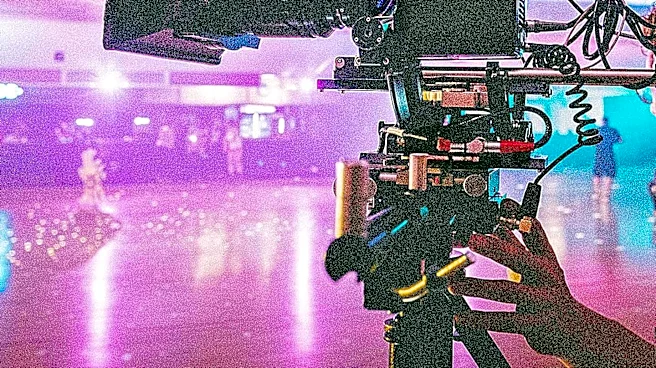
Cinematographer Gris Jordana, a long-time creative partner of the filmmakers, discusses her work on 'La Bola Negra,' highlighting the challenges of capturing three distinct realities across a 100-year span. The film itself is based on an unfinished play by Federico García Lorca and weaves together three storylines: a 1932 section about a young man seeking acceptance, a clandestine romance during the Spanish Civil War in 1937, and a 2017 portion that connects the narratives. Jordana explains that shooting on 35mm film allowed for creative freedom and an embrace of the unknown, emphasizing the importance of trusting each frame.
Why It's Important?
This Netflix series offers a significant look into the artistic and technical processes behind a critically acclaimed film, providing valuable insights for aspiring filmmakers, film students, and cinephiles. The focus on Gris Jordana's cinematography underscores the crucial role of visual storytelling in conveying complex narratives and historical periods. By showcasing the collaborative efforts between directors and their crew, the series highlights the intricate nature of film production and the dedication required to bring a vision to life. For the U.S. audience, it provides access to international filmmaking techniques and artistic approaches, potentially influencing local creative trends and fostering a deeper appreciation for global cinema. The detailed exploration of 'La Bola Negra's' visual language can also serve as a case study for understanding how historical and emotional depth can be achieved through cinematic artistry.
What's Next?
The release of 'The Art of La Bola Negra' series on Netflix will likely generate increased interest in the film itself, potentially leading to a wider viewership and critical re-evaluation. Filmmakers and cinematographers may draw inspiration from Jordana's techniques and approach to visual storytelling, influencing future productions. The series could also spark further discussions within the film industry about the value of behind-the-scenes content and its role in educating and engaging audiences. For Netflix, this type of content reinforces its commitment to showcasing the creative process, potentially attracting subscribers interested in the art of filmmaking. The detailed analysis of the film's visual language could also lead to academic studies and critical essays exploring its impact on contemporary cinema.
Beyond the Headlines
The series goes beyond a simple 'making-of' by exploring the philosophical and artistic choices that shape a film. Jordana's emphasis on embracing the unknown and trusting the frame speaks to a broader artistic principle of allowing for serendipity and intuition in creative work. This approach challenges the modern tendency towards hyper-control and predictability in production, suggesting that some of the most profound artistic achievements emerge from a willingness to let go. Furthermore, the film's narrative, spanning different historical eras and exploring themes of acceptance and clandestine romance, touches upon universal human experiences that resonate across cultures. The series, by dissecting the visual representation of these themes, offers a deeper understanding of how cinema can reflect and interpret complex societal dynamics and personal struggles, making it a valuable resource for cultural and historical analysis.