





What's Happening?
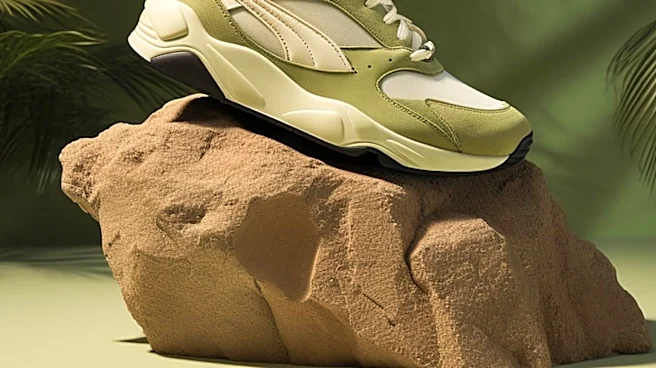
Puma SE reported a challenging Q2 2026, with a 9.4% decline in currency-adjusted sales due to reset measures and softer consumer demand. Despite this, the company improved profitability through higher gross margins and strong free cash flow. The Asia-Pacific
region showed growth, while the Americas and EMEA regions experienced declines. Puma's CEO, Arthur Hoeld, expressed confidence in a stronger second half of the year, reaffirming the company's full-year outlook. The company aims to optimize costs and improve its business model to support future growth.
Why It's Important?
Puma's performance reflects broader challenges in the global sportswear market, including fluctuating consumer demand and regional economic conditions. The company's ability to improve profitability despite declining sales demonstrates effective cost management and operational efficiency. Puma's focus on restructuring and strategic initiatives could position it for long-term growth, potentially increasing its competitiveness in the sportswear industry. Investors and stakeholders will be closely monitoring Puma's progress in achieving its financial targets and market expansion goals.
What's Next?
Puma plans to continue its restructuring efforts and focus on cost efficiency to drive sales improvement in the second half of 2026. The company aims to re-establish growth from 2027 and become one of the top three sports brands globally. Stakeholders will be watching for updates on Puma's strategic initiatives and market performance, particularly in key regions like North America and Asia-Pacific. The company's ability to adapt to market conditions and consumer preferences will be critical in achieving its long-term objectives.