





What's Happening?
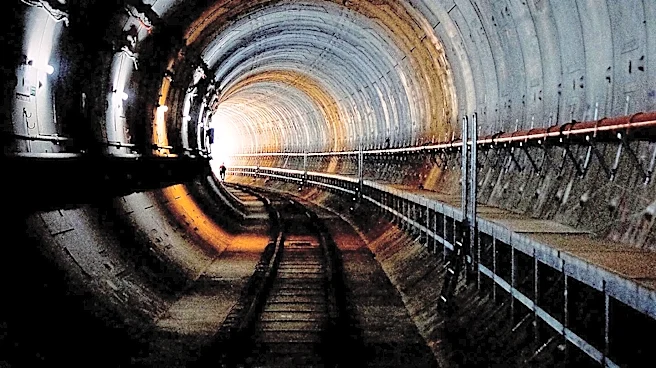
Munich Re Specialty's Global Markets Syndicate has launched a new Construction Rescue Insurance product, specifically designed for large-scale tunnelling and underground infrastructure projects. This offering is described as a first for the Lloyd's market.
The insurance aims to cover the significant and often unforeseen costs associated with rescue and crisis response following catastrophic underground incidents, such as tunnel collapses, flooding, power outages, fires, and equipment failures. The product provides funding for immediate response and recovery operations, specialist equipment and personnel, and technical and logistical coordination, with underwriting limits of $25 million per project. This initiative follows the success of Munich Re Specialty's Miner Rescue Insurance consortium, extending a similar innovative approach to the broader global tunnelling and infrastructure sector.
Why It's Important?
This new insurance product addresses a critical gap in the market for complex infrastructure projects, particularly in the U.S. where large-scale underground developments are increasingly common. Tunnelling is recognized as one of the most technically demanding disciplines in global infrastructure, and incidents can lead to rapid accumulation of costs and significant risks to human life. By providing immediate funding for rescue and crisis response, the insurance allows project owners and contractors to prioritize the safety and welfare of their workers without being constrained by financial resourcing issues during an emergency. This can lead to more efficient and effective rescue operations, potentially saving lives and mitigating the broader impact of such disasters on project timelines and public trust. The product's focus on rapid access to funds, rather than just the total payout, is a key differentiator that could set a new standard for risk management in the construction industry.
What's Next?
The introduction of this specialized Construction Rescue Insurance is expected to influence risk management practices within the U.S. tunnelling and underground infrastructure sector. Project owners and contractors involved in major developments, such as new subway lines, utility tunnels, or highway underpasses, may increasingly adopt such policies to enhance their emergency preparedness and financial resilience. The product's success could also prompt other insurers to develop similar offerings, leading to a more robust and competitive market for specialized construction insurance. Furthermore, the emphasis on immediate funding for rescue operations might encourage a re-evaluation of existing safety protocols and emergency response plans across the industry, potentially leading to improved standards and greater protection for workers in high-risk environments.
Beyond the Headlines
The launch of this insurance product highlights a growing recognition of the unique and severe risks associated with modern infrastructure projects. Beyond the immediate financial and operational benefits, this type of specialized coverage can foster a culture of proactive safety and crisis management within the construction industry. It underscores the ethical imperative for companies to prioritize human life and welfare, even in the face of unforeseen catastrophic events. The product's design, which focuses on the speed of funding during an active rescue, reflects a shift towards more dynamic and responsive risk solutions. This could also have long-term implications for how large-scale public and private infrastructure projects are financed and regulated, potentially leading to stricter requirements for comprehensive emergency preparedness and insurance coverage to protect both workers and public investments.