





What's Happening?
Thailand is actively seeking to diversify its economic partnerships with Japan, moving beyond the traditional automotive manufacturing sector to attract investment in high-tech industries such as semiconductor design and space technology. During recent
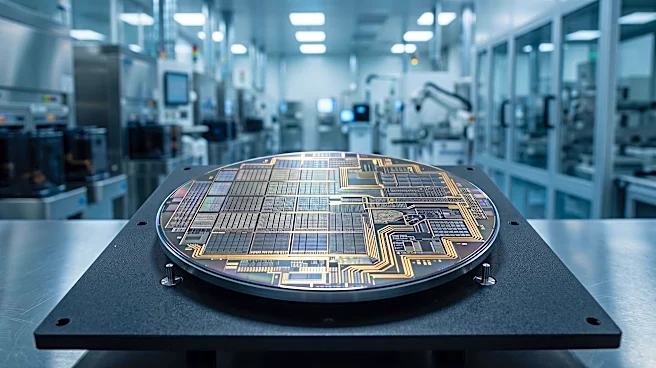
investment talks in Tokyo, Thai officials engaged with Japanese businesses and government representatives to promote these new areas. The discussions included a roundtable with 11 Japanese semiconductor executives, where Thailand highlighted its strengths in photonics, power units, and sensors, inviting investment in integrated circuit (IC) design and wafers. Additionally, Thailand explored opportunities in the space sector, proposing that its precision engineering capabilities could contribute to Japan's satellite supply chain. This strategic shift aims to build a more advanced industrial ecosystem and jointly develop technology, with the goal of attracting significant investment and creating highly skilled jobs.
Why It's Important?
This strategic pivot by Thailand is important as it signifies a broader trend among developing economies to move up the value chain and reduce reliance on traditional manufacturing. By targeting semiconductors and space, Thailand aims to tap into industries with high growth potential and technological sophistication. This could lead to a more resilient and diversified economy, less susceptible to fluctuations in specific sectors like automotive. For Japan, this collaboration offers an opportunity to leverage Thailand's workforce and manufacturing base, particularly in areas where Japan faces labor shortages, such as in the space sector. The focus on joint technology development and ecosystem building, rather than just attracting capital, suggests a deeper, more sustainable partnership that could foster innovation and create new market opportunities for both nations.
What's Next?
Thailand's Ministry of Industry plans to follow up on these discussions by developing an integrated recycling industrial estate, modeled on Japan's approach, to handle electronic waste, electrical appliances, and end-of-life vehicles. The Board of Investment (BOI) has been tasked with coordinating assessments of proposals from carmakers, who have pledged approximately THB134 billion in new investments. Both countries are also working to update the Japan-Thailand Economic Partnership Agreement (JTEPA) and review their tax convention to ease business barriers and encourage further investment. An Energy and Investment Dialogue with Japan's Ministry of Economy, Trade and Industry (METI) is scheduled before the Japanese prime minister's visit to Thailand in 2027, which marks the 140th anniversary of relations between the two countries. These steps indicate a concerted effort to solidify and expand the economic partnership.
Beyond the Headlines
The shift in Thailand's investment strategy reflects a recognition of global economic trends, particularly the increasing importance of digital and advanced manufacturing sectors. By actively pursuing investment in semiconductors and space, Thailand is positioning itself as a key player in the future global supply chain, moving beyond its traditional role as a manufacturing hub for internal combustion engine vehicles. This move also highlights the evolving nature of international economic partnerships, where countries are increasingly seeking to collaborate on technology development and ecosystem building rather than just capital investment. The emphasis on recycling and sustainable industrial practices, as seen in the planned integrated recycling industrial estate, also points to a growing awareness of environmental responsibility within economic development strategies.