








What's Happening?
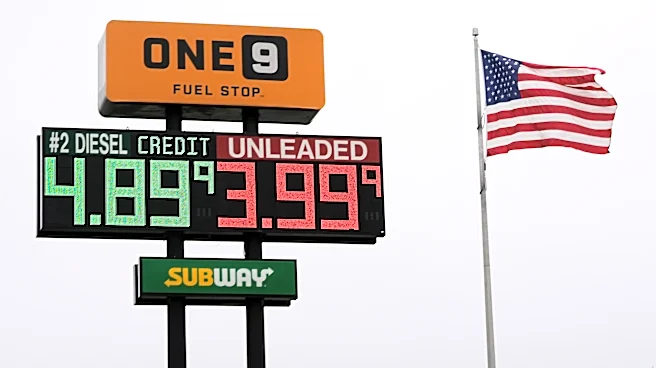
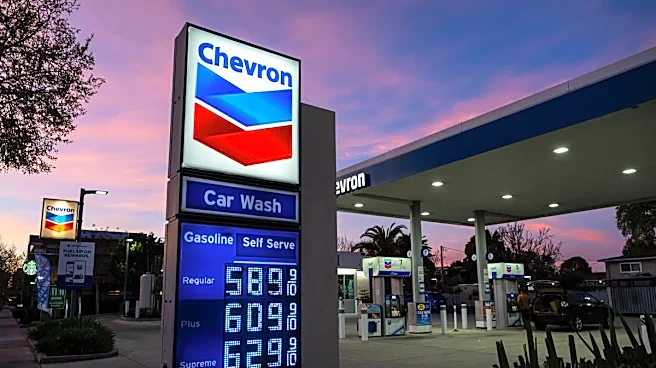
The average retail price of gasoline in the U.S. has decreased by 32.4 cents per gallon over the past three weeks, now averaging $4.243 per gallon. This decline is attributed to lower crude oil prices, with the West Texas Intermediate futures contract
dropping from $96.60 to $84.88 per barrel. The decrease in oil prices is linked to optimistic indicators of a potential resolution to the U.S.-Iran conflict and improved vessel traffic through the Strait of Hormuz. Additionally, U.S. gasoline stocks have expanded, and refiners have increased their utilization rates, contributing to the price drop. Retail margins have improved due to lower wholesale prices, although future price trends remain uncertain.
Why It's Important?
The reduction in gasoline prices provides relief to consumers and could positively impact the U.S. economy by reducing transportation costs. Lower fuel prices can increase disposable income for households and reduce operational costs for businesses reliant on transportation. However, the situation remains volatile, with future prices dependent on geopolitical developments and crude oil market dynamics. The potential resolution of the U.S.-Iran conflict could stabilize oil markets, but ongoing uncertainties highlight the need for strategic energy policies to mitigate price volatility.
What's Next?
If current trends continue, further reductions in gasoline prices may occur, potentially lowering costs by an additional 10 to 15 cents per gallon. Retailers are expected to continue passing on lower wholesale prices to consumers. However, the situation remains fluid, with potential geopolitical developments influencing future oil prices. Stakeholders, including policymakers and industry leaders, will need to monitor these developments closely to anticipate and respond to changes in the energy market.