
What's Happening?
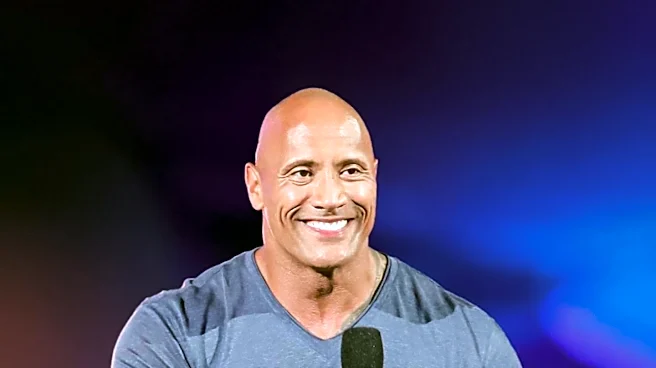
Dwayne 'The Rock' Johnson has become the subject of widespread online speculation regarding his health after manipulated photographs showing him with an unusually thin appearance circulated on social media.
These images led some users to suggest he was suffering from a serious medical condition, with one post on X falsely alleging he was battling a chronic infection and tuberculosis. Johnson's alleged illness was based on these fabricated photos and accompanying misinformation. The incident highlights the increasing difficulty for social media users to distinguish authentic content from manipulated images, especially with the growing use of artificial intelligence. Johnson has clarified that his recent significant physical transformation, which involved losing approximately 22 kilograms (48.5 pounds) over a year, was specifically for his upcoming movie project, 'Lizard Music,' directed by Benny Safdie. He emphasized that his current weight is between 232 and 235 pounds (105-106 kilograms) and that he has maintained his strength, endurance, and cardiovascular fitness through his training routine, diet, and conditioning.
Why It's Important?
This incident underscores a significant challenge in the digital age: the rapid spread of misinformation and the impact of manipulated content on public perception, particularly concerning public figures. The false health claims about Dwayne Johnson, a prominent U.S. celebrity, demonstrate how easily fabricated stories can gain traction, causing unnecessary concern among fans and potentially damaging an individual's reputation. The use of artificial intelligence to create convincing but fake images exacerbates this issue, making it harder for the average person to discern truth from fiction. This trend has broader implications for media literacy, trust in online information, and the ethical responsibilities of social media platforms. For celebrities, it highlights the constant scrutiny they face and the need for proactive communication to counter false narratives. The incident also serves as a reminder of the potential for online content to generate emotional responses and widespread concern based on inaccurate information, affecting not only individuals but also the collective digital environment.
What's Next?
In the immediate future, Dwayne Johnson will likely continue to promote his upcoming film 'Lizard Music,' where his physical transformation will be evident. His public appearances and statements will serve to further reinforce the truth behind his weight loss, countering any lingering misinformation. The incident may also prompt further discussions within the entertainment industry and among social media platforms about strategies to combat the spread of deepfakes and manipulated content. As AI technology advances, the challenge of distinguishing real from fake will only intensify, potentially leading to calls for more robust verification tools or stricter content policies from social media companies. For the public, it reinforces the importance of critically evaluating online information and seeking out verified sources before accepting or sharing news, especially concerning sensitive topics like health. The ongoing battle against misinformation will continue to evolve, with this case serving as a recent example of its impact.
Beyond the Headlines
The viral spread of manipulated images concerning Dwayne Johnson's health touches upon deeper societal and ethical implications. It highlights the erosion of trust in visual media, a cornerstone of information dissemination, as AI-generated content becomes indistinguishable from reality. This phenomenon can lead to a 'post-truth' environment where objective facts are less influential than emotional appeals and personal beliefs, posing a threat to informed public discourse. Ethically, the creation and dissemination of such content raise questions about consent, privacy, and the potential for harm to individuals, particularly public figures whose lives are constantly under scrutiny. The incident also reflects a broader cultural fascination with celebrity health and appearance, which can be exploited by those seeking to generate engagement through sensationalism. In the long term, this trend could necessitate significant advancements in digital forensics and media literacy education to equip individuals with the tools to navigate an increasingly complex and potentially deceptive online landscape. It underscores the urgent need for a collective effort to uphold truth and authenticity in the digital realm.