






What's Happening?
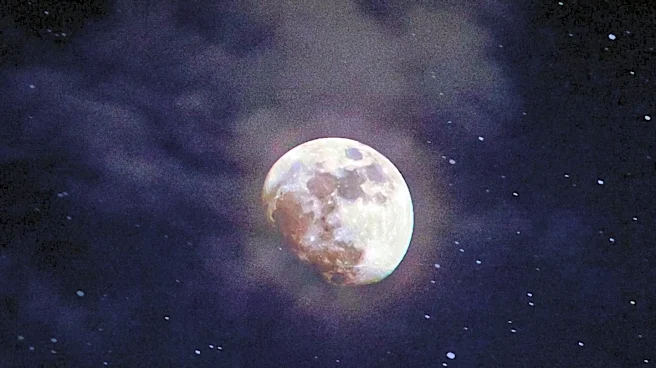
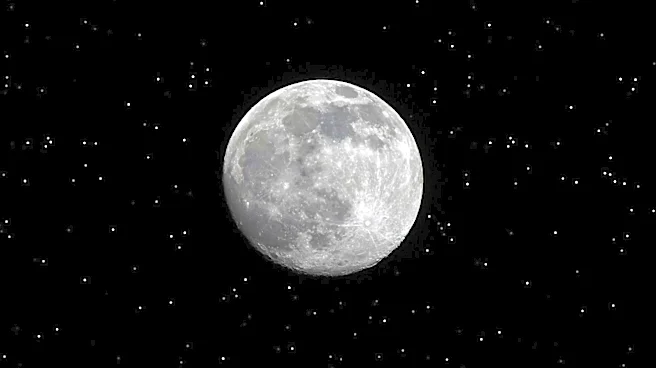
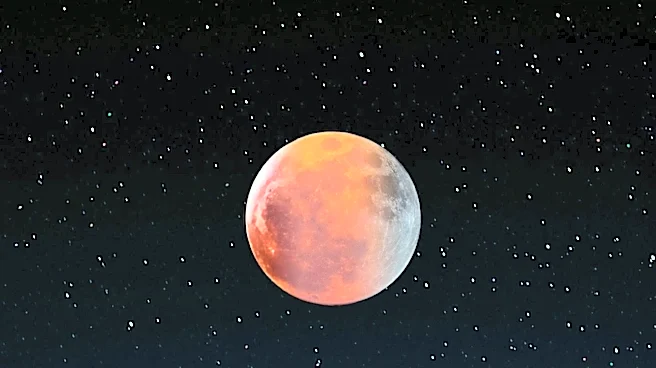
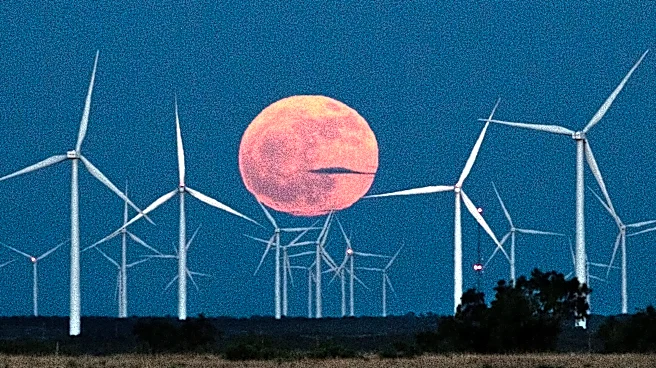
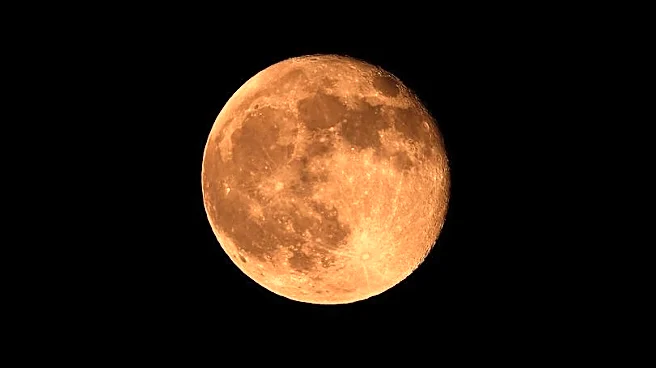
The June 2026 Strawberry Moon reached its apogee on June 28, sitting 252,441 miles from Earth. This event marks the Moon's farthest point from Earth during its orbit, providing a unique opportunity for skywatchers. The Moon was a waxing gibbous leading
up to the apogee, with high illumination levels affecting visibility of other celestial objects. Mars and Mercury were also visible, with Mars positioned near the Pleiades star cluster and Mercury becoming stationary later in the evening. The brightness of the Moon during this period made it challenging to observe fainter celestial objects like the Wild Duck Cluster.
Why It's Important?
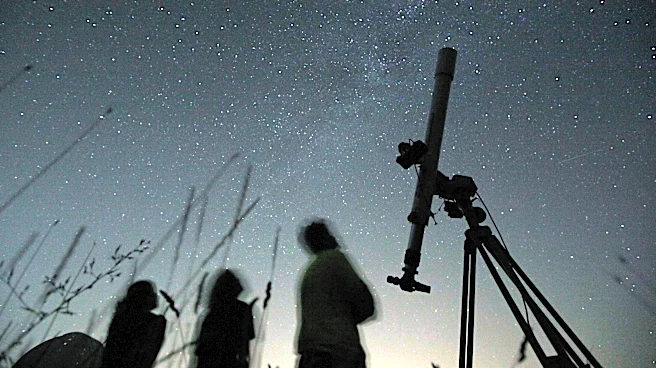
The Strawberry Moon's apogee offers a chance for astronomers and enthusiasts to observe the Moon at its farthest distance from Earth, a phenomenon that affects its apparent size and brightness. This event is part of a broader interest in celestial events that engage the public and promote interest in astronomy. The visibility of Mars and Mercury alongside the Moon provides additional opportunities for observation and study, contributing to educational and recreational activities related to astronomy.
What's Next?
Following the apogee, skywatchers can continue to observe the Moon as it moves through its phases. The visibility of Mars and Mercury will also change, offering different viewing opportunities. Astronomers and enthusiasts will likely continue to track these celestial events, sharing observations and insights with the broader community. The ongoing interest in such events underscores the importance of public engagement in science and the natural world.