






What's Happening?
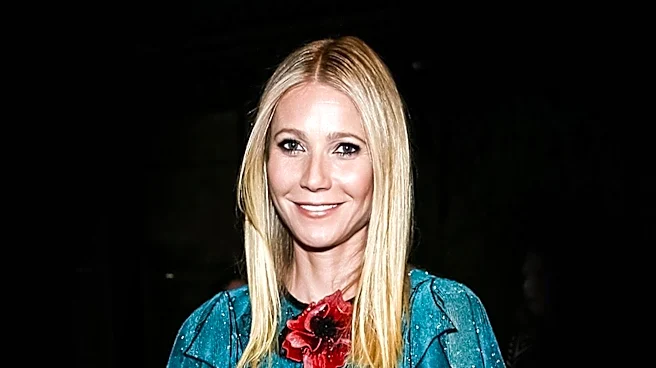
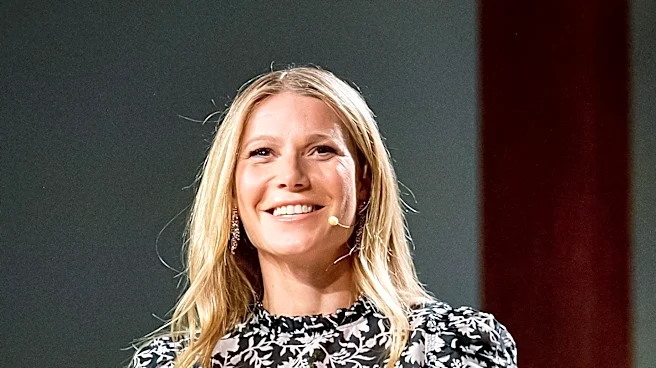
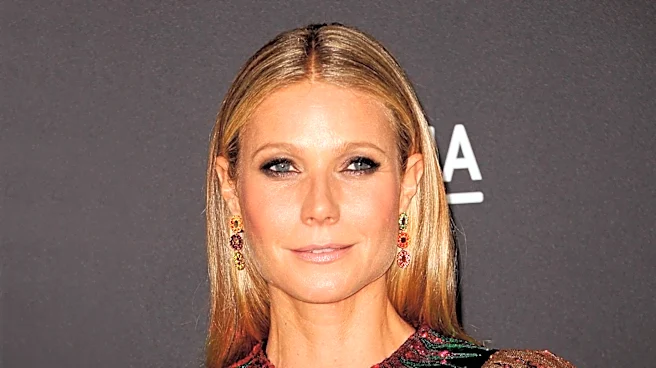
Gwyneth Paltrow and Chris Martin made a deliberate effort to maintain a unified family environment following their 2014 divorce, a process they famously termed 'conscious uncoupling.' Paltrow revealed that their primary motivation was to shield their children,
Apple and Moses, from the prolonged parental friction she experienced during her own parents' divorce. To achieve this, they consulted a therapist who introduced them to the concept of 'conscious uncoupling.' This approach involved a commitment to prioritize their children's well-being and to continue functioning as a family unit, even though they were no longer a couple. Paltrow recounted instances, such as committing to Sunday brunches, where they actively worked through potential tensions to ensure a stable environment for their kids. Despite the public scrutiny and negative press surrounding the term, their focus remained on fostering a harmonious co-parenting relationship.
Why It's Important?
The 'conscious uncoupling' approach adopted by Gwyneth Paltrow and Chris Martin highlights a significant shift in societal perceptions and practices surrounding divorce, particularly among high-profile individuals. This method emphasizes the emotional well-being of children over traditional adversarial divorce proceedings, potentially influencing how other families navigate separation. By openly discussing their efforts to maintain family unity, Paltrow and Martin have contributed to a broader conversation about healthy co-parenting and the long-term psychological impact of divorce on children. Their experience underscores the importance of seeking professional guidance, such as therapy, to manage complex family transitions. The public nature of their divorce and their unique approach also brought the concept of 'conscious uncoupling' into mainstream discourse, prompting discussions about alternative divorce models that prioritize collaboration and mutual respect.
What's Next?
While the initial phase of 'conscious uncoupling' has passed, the long-term implications of this approach continue to unfold as their children mature. The ongoing public discourse surrounding their co-parenting dynamic may further normalize non-traditional family structures and collaborative divorce methods. Other public figures and families facing similar situations might draw inspiration from their model, potentially leading to a greater adoption of therapeutic interventions and child-centric divorce strategies. The term itself, despite initial criticism, has become a recognized phrase, suggesting a lasting impact on how divorce is discussed and perceived. Future discussions may focus on the sustained success of such arrangements and their effectiveness in fostering well-adjusted children in post-divorce families.
Beyond the Headlines
The 'conscious uncoupling' phenomenon extends beyond a celebrity divorce, touching upon deeper societal and psychological dimensions of family dissolution. It challenges the conventional narrative of divorce as an inherently destructive event, proposing instead a framework for intentional and respectful separation. This approach encourages individuals to reflect on their roles as parents and co-parents, fostering a sense of shared responsibility even after the marital bond dissolves. Ethically, it raises questions about the balance between personal autonomy and familial obligations, particularly when children are involved. Culturally, it reflects a growing trend towards more mindful and emotionally intelligent approaches to life transitions, moving away from purely legalistic or adversarial frameworks. The initial negative press Paltrow received also highlights societal discomfort with redefining traditional family norms, yet the enduring commitment to their children's well-being ultimately underscores the profound shift in modern family dynamics.