









What's Happening?
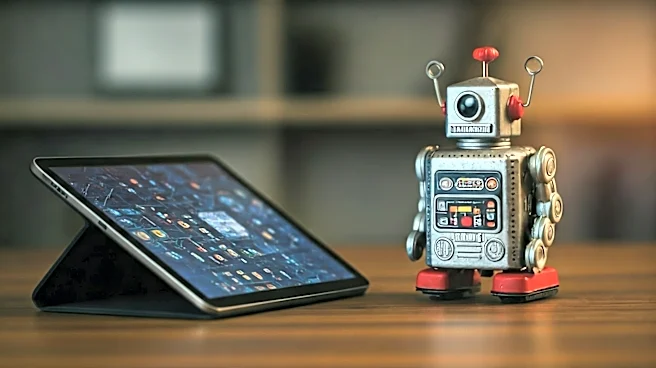
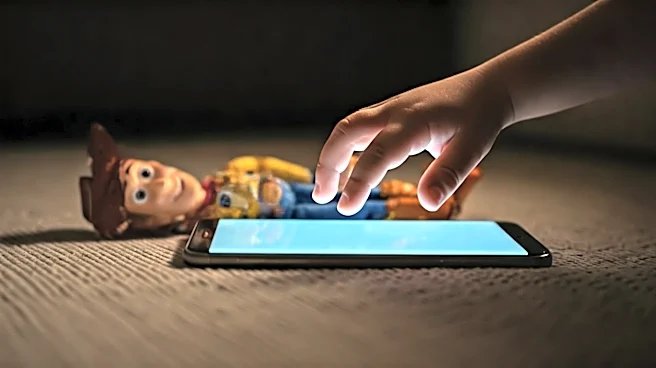
The release of Toy Story 5 brings attention to the increasing screen time among children during summer months. The film's plot, which features a battle between toys and technology, resonates with parents who observe their children spending more time on digital
devices. According to a report by Aura, an online safety company, screen time for children aged 7 to 12 increases by 30% during summer, equating to four additional hours per week compared to school time. The report, based on data from nearly 30,000 devices, reveals that 75% of children prefer watching videos over playing with toys. Pediatrician Dr. Jason Nagata notes that the lack of school structure contributes to higher screen use during summer. The study also highlights negative health impacts, such as poor sleep and mood, associated with excessive screen time.
Why It's Important?
The increase in screen time during summer months poses significant concerns for children's health and development. Excessive use of digital devices can displace essential activities like sleep, physical exercise, and outdoor play, which are crucial for children's well-being. The Aura report indicates that one in three children score low on the Digital Wellbeing Index, correlating high screen time with negative health parameters. This trend underscores the need for parents to find alternative activities that engage children physically and socially. The film Toy Story 5 serves as a cultural reflection of these issues, encouraging discussions about balancing technology use with traditional play and social interactions.
What's Next?
Parents and educators are encouraged to implement strategies to manage screen time effectively. Suggestions include organizing structured activities, such as summer camps, which often ban digital devices, and engaging children in planning their daily activities. The American Academy of Pediatrics recommends creating a family media plan to establish device-free times and spaces. As children become more aware of the drawbacks of excessive screen time, there is potential for a shift towards more balanced technology use. The ongoing dialogue about screen time, spurred by cultural references like Toy Story 5, may lead to broader societal changes in how technology is integrated into daily life.
Beyond the Headlines
The cultural impact of Toy Story 5 extends beyond entertainment, highlighting the ethical considerations of technology use among children. The film prompts reflection on the role of digital devices in childhood development and the importance of fostering real-world interactions. As technology continues to evolve, there is a growing need to address its addictive nature and design apps that promote healthier usage patterns. The narrative of Toy Story 5 encourages parents to model mindful technology use, potentially influencing future generations to prioritize face-to-face experiences over virtual interactions.