



What's Happening?
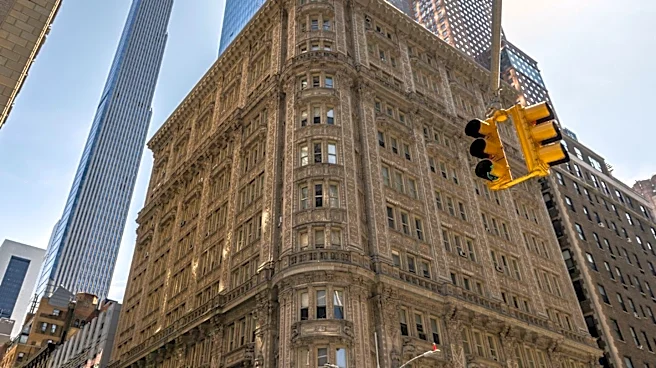
Northwind Group, a real estate private equity firm and debt fund manager, has provided significant construction loans totaling $427 million for two partial office-to-residential conversion projects in New York City. These projects include a $219 million loan for 100
Wall Street in Lower Manhattan and a $208 million loan for 141 Willoughby Street in Downtown Brooklyn. The conversions aim to transform portions of these office buildings into rental apartments while retaining viable commercial spaces. At 100 Wall Street, floors 2 through 11 will become 168 apartments, with floors 15 through 29 remaining office space. For 141 Willoughby Street, floors 8 through 23 are slated to become 239 apartments, while floors 1 through 7 will continue as commercial space. This approach allows owners to preserve the value of strong office components while creating residential value in other parts of the buildings, particularly in areas with high residential demand and supportive zoning.
Why It's Important?
These partial office-to-residential conversions are important for addressing the evolving real estate landscape in major U.S. cities like New York, which faces both office vacancies and a housing shortage. By repurposing underutilized office spaces, these projects contribute to increasing the supply of rental apartments, which can help alleviate housing pressures. The strategy of partial conversion is particularly significant as it allows for flexibility, enabling buildings to adapt to market demands without fully abandoning their commercial functions. This can provide a more stable financial model for developers, as existing office tenancy and cash flow can support the conversion process. The success of such projects could encourage similar developments in other urban centers experiencing similar challenges, potentially transforming cityscapes and urban planning strategies.
What's Next?
The construction and conversion processes for 100 Wall Street and 141 Willoughby Street will proceed, with the aim of bringing hundreds of new rental apartments to the New York City market. As these projects advance, their success will likely be closely watched by other developers and lenders. Northwind Group Founder and Managing Partner Ran Eliasaf suggests that capital will remain available for well-structured partial conversions with experienced sponsors and buildings naturally suited for residential use. This indicates a potential trend where more office building owners will evaluate their properties on a floor-by-floor basis to determine the most economically viable use. Future policy changes, such as New York City's 'City of Yes' and the 467-m tax incentive, could further encourage these types of conversions, making them a more common solution for urban development.
Beyond the Headlines
The rise of partial office-to-residential conversions reflects a deeper shift in urban real estate, driven by changing work patterns and housing demands. This trend highlights the need for adaptive reuse strategies in cities, moving beyond traditional single-use zoning. Ethically, these conversions can contribute to urban revitalization by bringing more residents into commercial districts, fostering more vibrant and mixed-use neighborhoods. Legally, the success of these projects often depends on supportive zoning and tax incentives, underscoring the role of local government in facilitating such transformations. Culturally, the integration of residential and commercial spaces within the same building could lead to new models of urban living and working, blurring the lines between professional and personal environments and potentially fostering stronger community ties within these redeveloped structures.