





What's Happening?
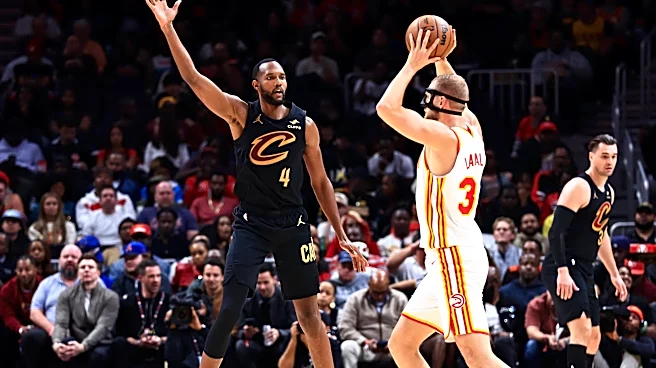
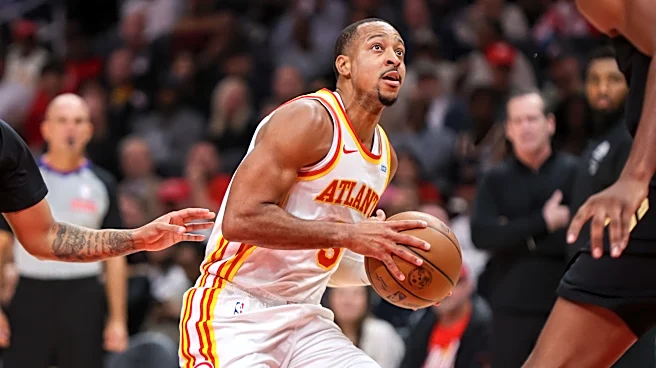
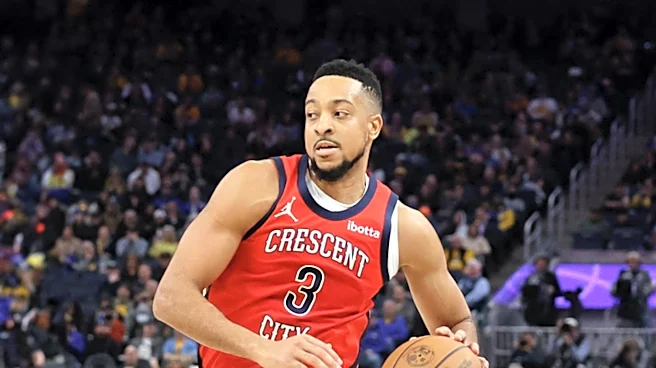
Atlanta Hawks guard CJ McCollum led his team in scoring with 14 points during Saturday's 121-99 loss to New Orleans. He achieved this on 5-of-9 shooting from the field, including 2-of-5 from three-point range, and was perfect on his two free-throw attempts,
adding two rebounds, two assists, and one steal in 24 minutes. Despite leading the team in this particular game, McCollum's season average stands at 14.4 points per game, which would mark his lowest scoring average since the 2014-15 season when he played for the Trail Blazers and averaged 6.8 points. The Hawks collectively struggled offensively in the game, shooting 38.5 percent from the field and a low 8-for-46 from beyond the arc.
Why It's Important?
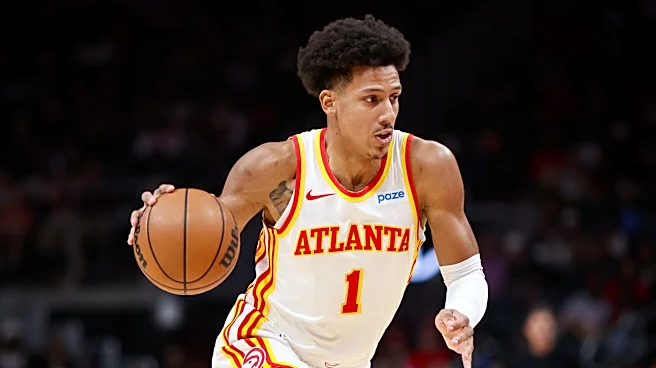
McCollum's performance highlights the Atlanta Hawks' offensive struggles and his own inconsistent scoring this season. As a veteran guard, his ability to consistently contribute offensively is crucial for the team's success, especially given his past scoring prowess. His current scoring average, if it holds, indicates a significant dip from his career norms, which could impact the Hawks' overall offensive strategy and their standing in the Eastern Conference. The team's poor shooting percentages in the game against New Orleans underscore a broader issue that needs addressing. While McCollum is not expected to be a 20-point scorer every night, his role as a key offensive player means his output directly influences the team's competitiveness. An expanded role could be on the horizon if teammate Jalen Johnson's ankle injury leads to missed time, placing more pressure on McCollum to deliver.
What's Next?
If Jalen Johnson's ankle injury sidelines him for an extended period, CJ McCollum is likely to see an expanded offensive role for the Atlanta Hawks. This would require him to increase his scoring consistency and overall offensive production to compensate for Johnson's absence. The Hawks will need to address their team-wide shooting struggles, particularly from three-point range, to improve their offensive efficiency. The coaching staff may look to adjust offensive schemes to create better scoring opportunities for McCollum and other key players. His performance in upcoming games will be closely watched as the team navigates potential roster changes and seeks to improve its record. The team's ability to integrate McCollum more effectively into their offensive flow will be critical for their success in the remainder of the season.
Beyond the Headlines
McCollum's fluctuating performance could be indicative of a broader transition phase for the veteran player, potentially adjusting to a new team dynamic or a different stage in his career. The challenge for the Hawks is to maximize his experience and skill set even if his scoring numbers are not at their peak. This situation also brings into focus the delicate balance of team chemistry and individual performance in professional sports. How the coaching staff manages McCollum's role and integrates him with other players, especially younger talent, will be key. His leadership and court vision, even when scoring is inconsistent, remain valuable assets. The team's overall offensive strategy will need to adapt to ensure that McCollum's contributions, whether through scoring, playmaking, or veteran presence, are fully utilized to achieve collective success.