







What's Happening?
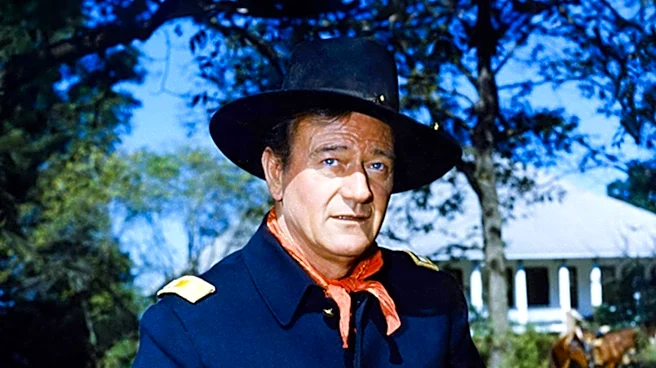
Despite its critical acclaim and enduring popularity, legendary actor John Wayne reportedly held a strong dislike for his own performance in the 1965 Western film 'The Sons of Katie Elder.' According to a 1968 interview with Roger Ebert, Wayne revealed
that he associated the film with negative personal experiences. He had undergone surgery to remove his left lung due to cancer from heavy smoking just one year prior to filming. Wayne stated that he felt he could constantly hear himself breathing during production and did not feel like he was at his peak physical or acting ability. He also recounted that director Henry Hathaway, despite being thoughtful, took him to film at an altitude of 8,500 feet and had him jump into ice water on the fourth day of shooting, which was challenging given his recent recovery.
Why It's Important?
This revelation offers a unique insight into the personal struggles of a major Hollywood icon and the pressures faced by actors, even those at the height of their careers. It highlights the often-unseen physical and emotional toll that filmmaking can take, especially when combined with personal health challenges. For the U.S. film industry, Wayne's experience underscores the demanding nature of production schedules and the expectation for stars to perform despite personal difficulties. It also provides a contrasting perspective to public perception, where a film widely regarded as a classic was viewed by its lead actor as a difficult and unsatisfactory experience. This insight can influence how audiences and critics evaluate performances, encouraging a deeper understanding of the context in which films are made, and potentially sparking discussions about actor welfare and the ethics of demanding performances from individuals in recovery.
What's Next?
While 'The Sons of Katie Elder' remains a celebrated Western, Wayne's personal feelings about his performance are unlikely to alter its historical standing or its influence on the genre. However, this information may prompt renewed interest in the film, with viewers potentially re-evaluating Wayne's portrayal through the lens of his health struggles. Film historians and critics might incorporate this context into future analyses of his work and career. The anecdote also serves as a reminder of the human element behind cinematic productions, encouraging a more empathetic view of performers. There are no immediate foreseeable consequences for the film itself, but it adds a poignant layer to the legacy of one of America's most iconic actors.
Beyond the Headlines
John Wayne's candid admission about his struggles during 'The Sons of Katie Elder' touches upon broader themes of vulnerability and the public image of masculinity in Hollywood. As a figure synonymous with rugged individualism and strength, his private battle with cancer and its impact on his work reveal the complex reality behind the carefully constructed persona. This narrative challenges the myth of the invincible star, offering a more humanized portrait of a cultural icon. It also implicitly raises questions about the pressures on actors to maintain a certain image and work ethic, even at personal cost. The film's continued popularity despite Wayne's personal dissatisfaction highlights the disconnect between an artist's self-perception and the audience's reception, underscoring how a work can transcend its creator's immediate experience to achieve lasting cultural significance.