


What's Happening?
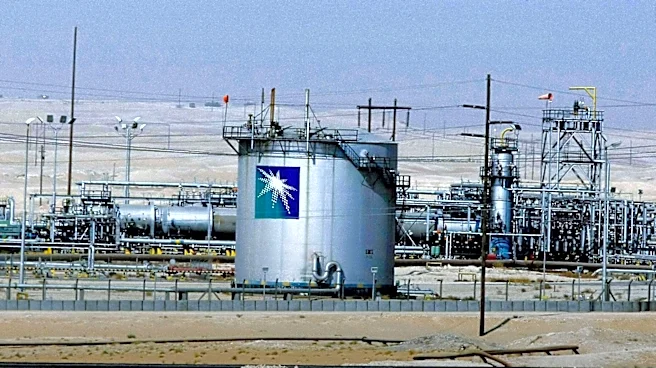
GAS Arabian Services has signed a contract with Saudi Aramco for installation work across various oilfield infrastructure components. This includes well sites, mainlines, flowlines, and gathering networks, along with their associated facilities and equipment.
The agreement has an initial term of three years, with an option for Saudi Aramco to extend it by an additional 24 months. The contract's financial value was not defined at the time of signing, as it operates on a unit-rate basis. The total value will depend on the specific work orders issued by Saudi Aramco and the quantities of work actually executed by GAS Arabian Services, in accordance with agreed-upon rates and terms. This arrangement means that the revenue generated from the contract will become clear as work orders are received and completed, rather than being a fixed amount upfront. The announcement was made following a company disclosure to Tadawul on November 22, 2026.
Why It's Important?
This contract signifies a significant commercial horizon for GAS Arabian Services within the Saudi oil and gas sector, a critical global energy market. While the immediate financial impact is not quantified, securing a multi-year agreement with a major entity like Saudi Aramco provides stability and potential for sustained revenue streams for GAS Arabian Services. For the broader oilfield services sector, this development indicates ongoing investment in infrastructure maintenance and expansion by Saudi Aramco, suggesting continued demand for specialized installation services. The unit-rate structure allows for flexibility in project scope and execution, adapting to Saudi Aramco's evolving operational needs. This type of long-term framework agreement is crucial for contractors, enabling better planning for personnel, equipment allocation, and mobilization, which are vital for efficient project delivery in large-scale energy projects.
What's Next?
The immediate next steps will involve Saudi Aramco issuing specific work orders to GAS Arabian Services, detailing the scope, locations, and technical requirements for each installation task. As these orders are received and executed, the financial volume of the contract will begin to materialize. GAS Arabian Services anticipates a positive contribution to its financial results as work is awarded and completed. For the supply chain, future details regarding specific sites, contracted scopes, and quantities executed will identify particular material and equipment requirements. The potential 24-month extension option, exercisable by Saudi Aramco, could further extend the commercial relationship to a five-year horizon, subject to performance and strategic needs. The progress and financial impact of this contract will be measured by the actual work performed rather than an initial lump sum.
Beyond the Headlines
The nature of this contract, based on unit rates and work orders, highlights a common contracting model in large-scale industrial projects, particularly in the energy sector. This approach allows for adaptability to dynamic operational environments and project timelines, where specific needs may evolve over time. It also places a premium on the contractor's operational efficiency and ability to respond to varying demands. The distinction between a long-term contracting framework and specific assignments underscores the complexity of managing large infrastructure projects, where the 'commercial horizon' provides strategic stability, while 'operational scheduling' requires defined tasks. This model also implies a continuous assessment of performance and cost-effectiveness, as Saudi Aramco retains discretion over the volume of work awarded and the potential extension of the agreement.