







What's Happening?
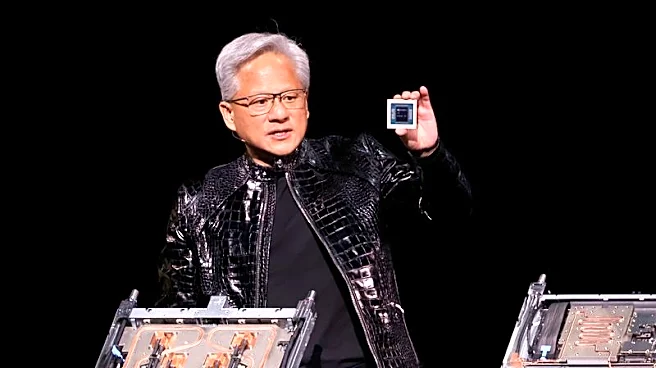
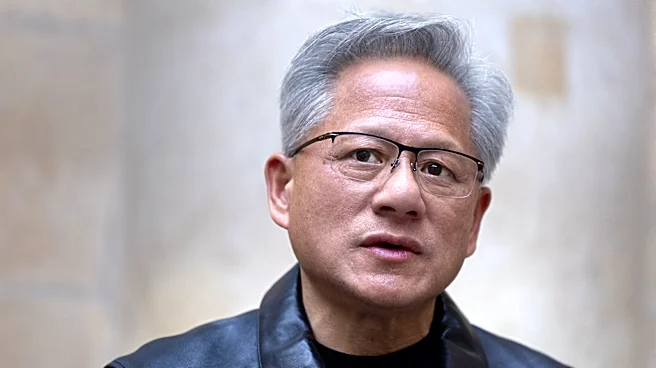
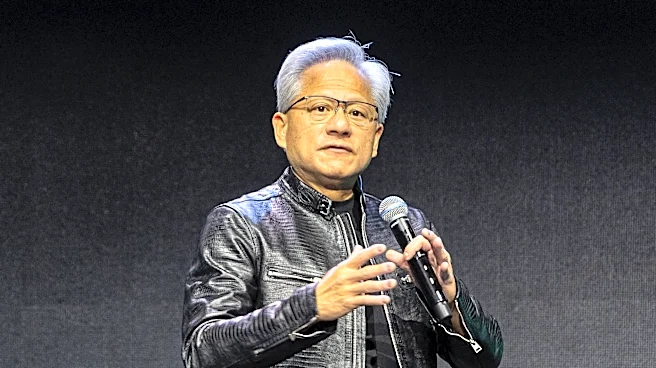
Nvidia CEO Jensen Huang, co-founder of the $4 trillion company, resigned in November 2026 following an admission of infidelity and reports linking him to a former executive at Megaspeed, an Nvidia customer. U.S. intelligence agencies reportedly believe
Megaspeed was used by Chinese intelligence to target Huang. An independent board investigation into his personal relationships began on November 8, leading to his resignation four days later. Chief Financial Officer Colette Kress has been appointed interim CEO. The controversy highlights a potential conflict of interest, as Huang had previously described his interactions with the Megaspeed executive as 'completely normal and not unusual' before acknowledging the affair. This situation draws parallels to other CEO departures due to undisclosed relationships, such as Nestlé's Laurent Freixe and McDonald's Steve Easterbrook, who was made to repay $105 million in severance.
Why It's Important?
This event is significant for several reasons. Firstly, it exposes a potential governance gap at one of the world's most valuable companies, Nvidia, particularly concerning succession planning. Despite its immense value, the company reportedly lacked a formal succession plan, with Huang, 63, having resisted such discussions and previously stating he could lead for decades more. This raises concerns about the company's long-term stability and talent development pipeline, as Huang had over 60 direct reports, suggesting a highly centralized leadership structure. Secondly, the incident underscores the risks associated with 'mythologizing' a founder, where a company's identity becomes too intertwined with a single individual. Such a situation can create vulnerabilities when that founder departs, potentially impacting investor confidence and talent retention. The financial implications for shareholders are also considerable, as a CEO's perceived irreplaceability can distort a firm's valuation, which theoretically reflects future cash flows. Unplanned CEO departures are common, with over one in four in the S&P 1500 since 2020 being forced or sudden, emphasizing the critical need for robust governance and succession strategies.
What's Next?
The ongoing investigation into Jensen Huang's conduct will likely determine the full extent of the implications for Nvidia. The board's ability to navigate this crisis and establish clear leadership under interim CEO Colette Kress will be crucial for maintaining investor confidence and operational stability. Nvidia will need to address the identified governance gaps, particularly regarding succession planning, to ensure the company's resilience against future leadership changes. This incident may also prompt other companies, especially those with highly influential founders, to review and strengthen their own succession plans and conflict-of-interest policies. The broader technology sector may also face increased scrutiny regarding the personal conduct of its leaders and the potential national security implications of their relationships with foreign entities, given the reported involvement of Chinese intelligence.
Beyond the Headlines
Beyond the immediate corporate and financial repercussions, this event delves into the ethical and cultural dimensions of leadership in the modern business world. The 'myth of the irreplaceable founder' often celebrated in business narratives, is being challenged, highlighting the potential dangers of a company becoming overly reliant on a single personality. This situation raises questions about the balance between a founder's vision and the need for robust corporate governance that ensures long-term sustainability beyond any individual. The reported espionage angle adds a layer of national security concern, underscoring the increasing geopolitical risks that corporate leaders, particularly in critical technology sectors, must navigate. It also brings to light the evolving expectations of transparency and accountability for CEOs, where personal conduct can have significant professional and organizational consequences, even if not directly related to financial malfeasance.