

What's Happening?
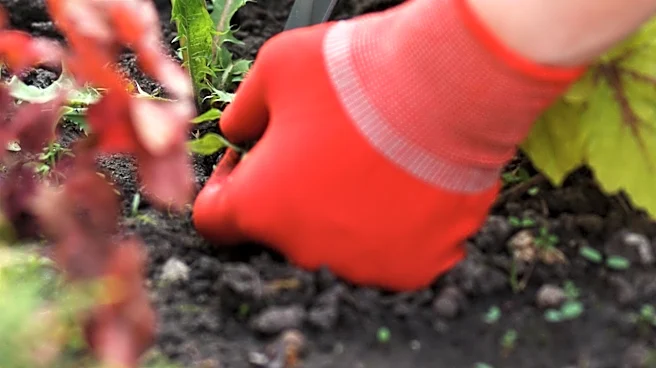
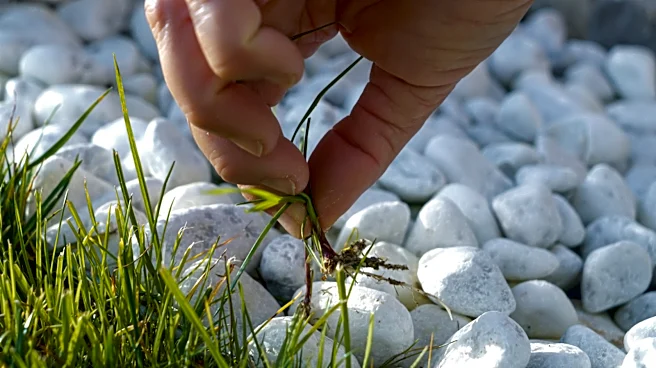
A new tool, the Husky Double Injection Stainless Steel Hand Weeder, is being highlighted as an effective solution for removing weeds from gravel driveways. Unlike traditional methods such as using hands or screwdrivers, which often leave roots behind,
this hand weeder is designed to tackle weeds at their roots. The tool features a grooved, forked tip made of rust-resistant stainless steel and an ergonomic handle with a nonslip grip, making it practical for use in compact soil and gravel. The weeder measures approximately 6 ¼ inches, making it a kneel-down tool, which may not be suitable for individuals with back issues. Customer feedback has been largely positive, with users praising its sturdiness and effectiveness, particularly for removing dandelions. However, some users noted that it may not work on all types of weeds, suggesting the need for additional weeding tools.
Why It's Important?
The introduction of the Husky hand weeder addresses a common issue faced by homeowners with gravel driveways: persistent weed growth. Weeds not only detract from the aesthetic appeal of driveways but can also cause damage over time if not properly managed. By providing a tool that effectively removes weeds at the root, homeowners can maintain the appearance and integrity of their driveways more easily. This tool could reduce the need for chemical weed killers, promoting a more environmentally friendly approach to weed management. Additionally, the positive customer feedback suggests that the tool could become a popular choice among consumers seeking efficient gardening solutions.
What's Next?
As the Husky hand weeder gains popularity, it may prompt other manufacturers to develop similar tools or improve existing designs to cater to consumer demand for effective and ergonomic gardening tools. Retailers might also expand their product lines to include a variety of weeding tools to address different types of weeds and user needs. Furthermore, the success of this tool could encourage more homeowners to adopt manual weeding methods, potentially leading to a decrease in the use of chemical herbicides.