








What's Happening?
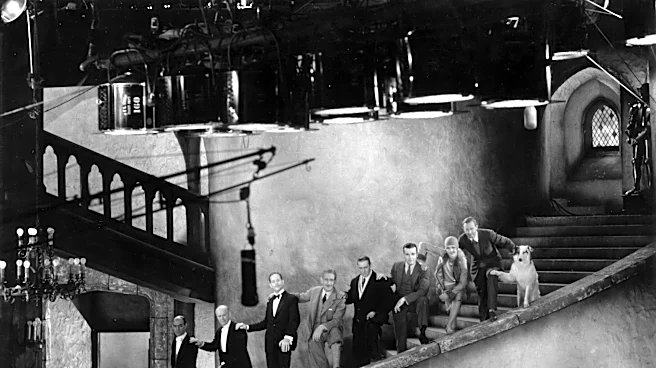
The UC Irvine Langson Orange County Museum of Art has launched an exhibition titled 'Staging California in Early Hollywood,' which focuses on the often uncredited set artists who contributed significantly to early 20th-century films. The exhibition showcases
works by artists like Paul Grimm, known for his plein air landscapes, and Emil J. Kosa Jr., who led the art direction for 'The Sound of Music.' Despite their contributions, many of these artists did not receive individual recognition, as the studio system prioritized efficiency over personal credit. The exhibition is the museum's first since UC Irvine acquired the Orange County Museum of Art, and it features about 50 pieces, including works by Warren Newcombe and George Gibson, who were instrumental in films like 'The Wizard of Oz.'
Why It's Important?
This exhibition sheds light on the historical oversight of artists who played crucial roles in shaping the visual aesthetics of early Hollywood films. By highlighting these artists, the exhibition not only acknowledges their contributions but also challenges the traditional narrative that often overlooks the collaborative nature of filmmaking. This recognition can influence how art and film history are taught and appreciated, potentially leading to a reevaluation of the contributions of behind-the-scenes artists in the film industry. It also underscores the importance of crediting all contributors in creative industries, which can impact current practices in film and other collaborative arts.
What's Next?
The exhibition is open to the public until October 4, 2026, offering an opportunity for visitors to engage with the history of film art. It may inspire further research and exhibitions focused on uncredited artists in other creative fields. Additionally, the recognition of these artists could lead to increased interest in the preservation and study of film set art, potentially influencing future museum acquisitions and exhibitions. The exhibition may also prompt discussions within the film industry about the importance of crediting all contributors, which could lead to changes in how credits are assigned in modern filmmaking.
Beyond the Headlines
The exhibition not only highlights the artistic contributions of these set artists but also raises questions about the ethics of credit and recognition in the arts. It challenges the notion that commercial art lacks artistic merit, emphasizing the skill and creativity involved in creating film sets. This could lead to a broader appreciation of the artistic value of commercial art and its role in cultural history. Furthermore, the exhibition's focus on uncredited artists during wartime highlights the intersection of art and patriotism, offering a nuanced perspective on the contributions of artists to national efforts.