






What's Happening?
Saudi state oil giant Aramco is actively exploring the expansion of its crude pipeline network to circumvent the Strait of Hormuz, a critical chokepoint that previously handled 20% of global oil supplies. This strategic move comes as the world experiences
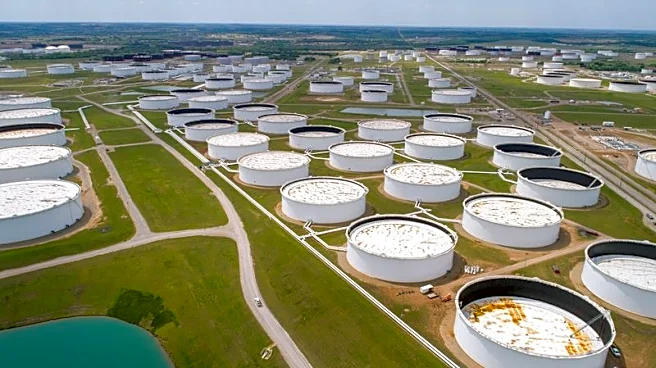
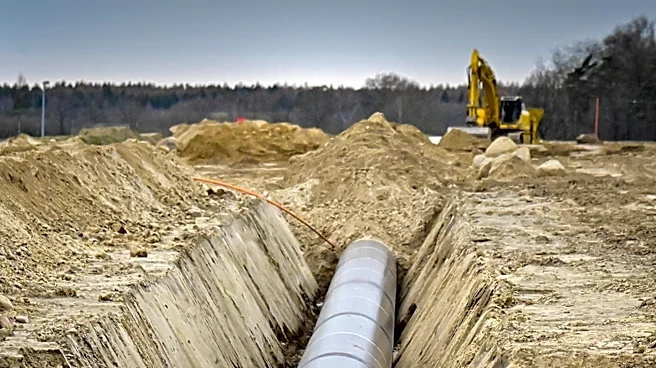
significant energy supply shocks, leading to redrawn global energy flows and infrastructure investment priorities in the Gulf. According to Aramco CEO Amin Nasser, work has already commenced on expanding the East-West pipeline and developing additional networks. The East-West pipeline, which has been subjected to attacks during the US-Iran war, currently has a capacity of up to 7 million barrels of oil per day. Saudi Energy Minister Prince Abdulaziz bin Salman previously indicated plans to expand crude export capacity via pipelines to as much as 10 million barrels per day by repurposing a domestic gas pipeline and investing in the existing East-West network. Aramco is also conducting engineering work for new export routes and exploring additional overseas storage capacity.
Why It's Important?
The potential expansion of Saudi Aramco's pipeline capacity to bypass the Strait of Hormuz is a critical development for global energy security and stability. The Strait's vulnerability to geopolitical tensions has historically posed significant risks to oil supplies, leading to price volatility and supply disruptions. By creating alternative export routes, Saudi Arabia aims to enhance the resilience of its oil exports, ensuring more reliable access to international markets. This move could mitigate the impact of future disruptions in the Strait, which has seen over 130 attacks on tankers, causing freight rates to surge. For the U.S. and other major oil-consuming nations, a more secure and diversified supply of crude oil from Saudi Arabia could help stabilize global energy markets, reduce inflationary pressures, and support economic growth by ensuring consistent access to essential energy resources.
What's Next?
Aramco is continuing its engineering work on additional export routes and overseas storage capacity, though specific details will not be disclosed until final investment decisions are made. The company's focus on expanding its East-West pipeline is a direct response to the ongoing energy supply challenges and the need for more resilient export infrastructure. The impact of these efforts extends beyond energy, as Nasser noted that higher transportation costs and shortages in other commodities are contributing to global inflationary pressures. Aramco reported a significant surge in third-quarter net profit, demonstrating its resilience amidst these challenges. The long-term goal is to ensure that demand fundamentals remain strong and that the world's energy future is not solely dependent on short-term market conditions, with Aramco ready to rapidly increase production when necessary.
Beyond the Headlines
The strategic shift by Saudi Aramco to reduce reliance on the Strait of Hormuz highlights a broader trend in global energy geopolitics: the increasing emphasis on supply chain resilience and diversification in the face of regional instability. This move could reshape maritime trade routes and influence future infrastructure investments in the Middle East. Beyond the immediate economic and security implications, it also underscores the potential for technological innovation in pipeline construction and logistics to overcome geographical and political chokepoints. The long-term success of this strategy could set a precedent for other energy-producing nations to invest in similar bypass capabilities, fundamentally altering the risk landscape of global energy transportation and potentially leading to a more distributed and secure energy infrastructure worldwide.