




What's Happening?
Jinko Holdings Limited (NYSE: JKS) announced its unaudited financial results for the third quarter ended September 30, 2026, reporting a significant narrowing of its net loss. The net loss attributable to ordinary shareholders was RMB170.0 million (US$25.4
million), a substantial improvement from RMB697.3 million in Q2 2026 and RMB749.8 million in Q3 2025. Total revenues for the quarter were RMB13.62 billion (US$2.03 billion), an increase of 10.2% sequentially but a decrease of 15.7% year-over-year. Gross profit rose to RMB1.67 billion (US$249.3 million), with a gross profit margin of 12.3%, up from 4.2% in Q2 2026. This improvement was driven by continuous cost optimization in high-efficiency production lines, increased shipments of high-efficiency products like Tiger Neo 3.0 modules (exceeding 5 GW), and a greater contribution from higher-margin energy storage system revenue. The company also recognized approximately 1.75 GWh of energy storage system (ESS) shipments as revenue, matching the total for full year 2025. Jinko Holdings continues to invest in semiconductors, artificial intelligence (AI), and other frontier technologies, with total new and follow-on investments of approximately RMB330 million in Q3.
Why It's Important?
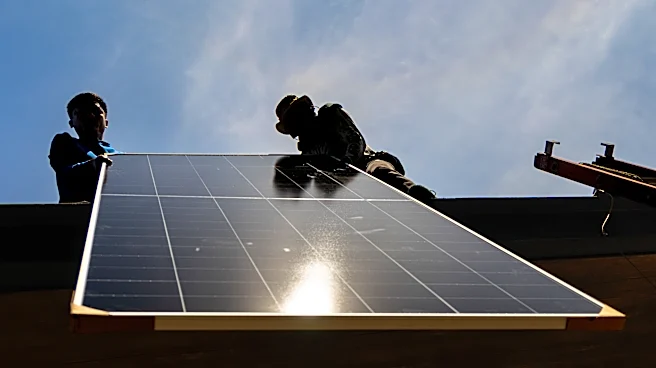
Jinko Holdings' Q3 2026 results highlight a strategic pivot towards higher-efficiency products and energy storage, which is crucial for navigating the competitive solar industry. The significant improvement in gross margin and the narrowing of net loss demonstrate the effectiveness of the company's focus on product mix optimization and cost control. For the U.S. market, Jinko Holdings' emphasis on high-efficiency solar modules and energy storage solutions is particularly relevant given the growing demand for renewable energy and grid stability. The launch of the Tiger Neo 5.0 all-black premium residential module, targeting global premium distributed PV markets, indicates a move towards higher-value segments, including residential rooftop applications in the U.S. The company's investments in AI and other frontier technologies also signal a broader strategy to diversify and integrate advanced solutions, potentially impacting the future landscape of renewable energy infrastructure and smart grid development in the U.S. and globally. This strategic direction positions Jinko Holdings to capitalize on evolving energy demands and technological advancements.
What's Next?
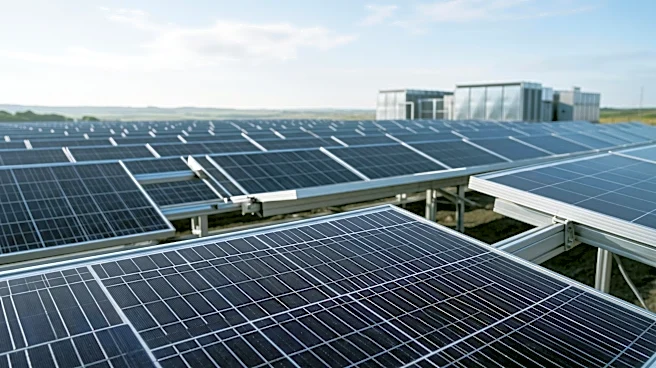
Jinko Holdings projects module shipments to be between 16 GW and 18 GW for the fourth quarter of 2026, and approximately 10 GWh of ESS shipments for the full year 2026. The company expects to have about 40 GW of high-efficiency production capacity meeting Level 1 national energy efficiency requirements by the end of 2026, as the ramp-up for Tiger Neo 3.0 progresses. Jinko Holdings plans to gradually increase production and shipments of its Tiger Neo 5.0 all-black premium residential module over the next two years, aligning with market demand. The company will continue to build on three core pillars: technological innovation, globalization, and AI transformation, to drive integrated solar-plus-storage development. This includes optimizing product and order book mix, maintaining strict control over capital expenditure, and exploring opportunities in emerging scenarios like data centers for its PCS products. The company's strategic investment platform will continue to drive long-term value creation through disciplined investments in AI, renewable energy, advanced materials, and commercial space.