






What's Happening?
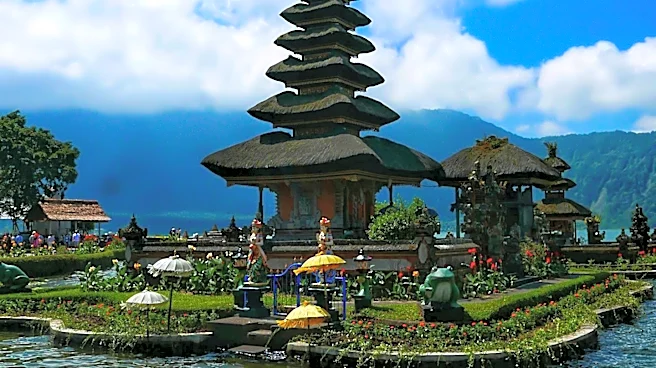
Ubud, Bali, has seen a significant increase in tourist visits, largely attributed to Elizabeth Gilbert’s book 'Eat, Pray, Love.' This surge in popularity has led to noticeable changes in the city, including increased crowding, extensive urban sprawl,
and heavy traffic. Sidewalks are described as uneven, and crossing streets has become a challenging endeavor. Despite these challenges, the area continues to offer a rich cultural experience. Activities available to visitors include traditional dance performances, 'Happy Yoga' sessions focusing on laughter, and lessons on crafting palm leaf containers for daily offerings to Hindu gods. The region also provides opportunities to learn about local customs, such as the caste system and traditional family structures, through interactions with residents. Visitors can also explore natural attractions like volcanoes and ancient villages accessible by boat.
Why It's Important?
The increased tourism in Ubud, while boosting the local economy, presents a dual impact on the region. Economically, the influx of visitors generates revenue for local businesses, supports cultural institutions like dance schools, and helps preserve natural vistas through tourist fees for activities such as zip-lining and swings over rice paddies. However, the rapid growth has also led to significant infrastructure challenges, including traffic congestion and urban development that alters the city's original character. The commercialization of certain areas might detract from the authentic cultural experience many visitors seek, potentially leading to a less 'off the beaten path' feel. The balance between economic benefit and preserving cultural integrity and environmental sustainability is a critical consideration for Ubud's future, as it navigates its identity as a global tourist destination.
What's Next?
As Ubud continues to grapple with the effects of increased tourism, future developments may focus on managing visitor flow and preserving the local environment and culture. Efforts could include implementing traffic management solutions, developing sustainable tourism practices, and promoting lesser-known areas to distribute tourist impact more evenly. Local authorities and tourism boards might explore strategies to enhance the visitor experience while mitigating negative consequences such as overcrowding and environmental strain. This could involve encouraging longer stays in specific areas, promoting eco-tourism, or investing in infrastructure improvements that support both residents and tourists. The ongoing challenge will be to maintain the charm and authenticity that initially attracted visitors, while accommodating the growing numbers drawn to Bali's unique appeal.
Beyond the Headlines
The narrative of Ubud's transformation highlights a broader global phenomenon where popular media, such as books and films, can profoundly influence tourism patterns and the socio-economic landscape of destinations. 'Eat, Pray, Love' inadvertently turned Ubud into a pilgrimage site for many, illustrating the power of storytelling in shaping travel trends. This raises ethical questions about the responsibility of creators and the tourism industry in managing the impact of such exposure. The tension between economic development driven by tourism and the preservation of local culture and environment is a recurring theme. Ubud's experience serves as a case study for understanding how destinations can navigate the double-edged sword of fame, balancing the desire for economic prosperity with the imperative to protect their unique heritage and natural beauty for future generations.