
What's Happening?
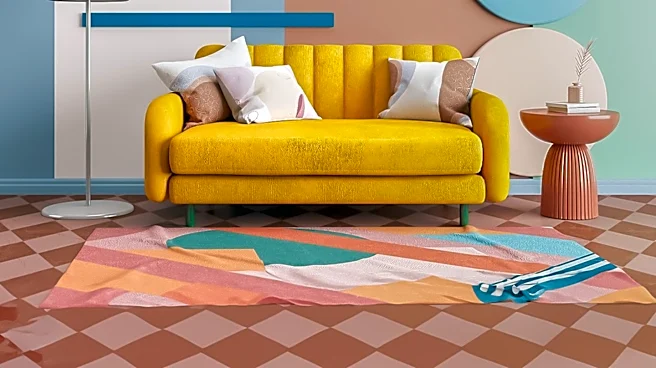
Current interior design trends indicate a significant move towards more expressive and personalized home aesthetics, particularly concerning rugs. Designers are observing a preference for bold, patterned
rugs, moving away from traditional, subdued styles. A notable aspect of this shift is the increasing demand for irregularly shaped rugs, which introduce a unique and individualistic element to living spaces. This trend also highlights a rise in custom-made rugs, allowing homeowners greater autonomy over color and pattern choices. The emphasis is on creating uplifting and joyful environments, with rugs serving as central design statements rather than mere background elements. This evolution reflects a broader desire for homes to be daring and reflective of personal style, moving beyond conventional design rules.
Why It's Important?
This shift in interior design trends is important for the U.S. home furnishings industry, particularly manufacturers and retailers of rugs. A move towards bold, patterned, and irregularly shaped designs, along with an increased demand for custom-made options, signals a need for companies to adapt their product offerings and manufacturing processes. Businesses that can quickly respond to these preferences by providing diverse and customizable rug options are likely to gain a competitive advantage. Furthermore, the emphasis on personal autonomy in design suggests a growing market for bespoke services and unique, artisanal products. This trend could also influence related sectors, such as textile manufacturing and interior design services, as consumers seek professional guidance to integrate these new styles into their homes. Companies failing to innovate and offer these trending styles may see a decline in market share.
What's Next?
In response to these evolving trends, rug manufacturers and interior design firms are expected to further explore and integrate bold patterns, vibrant colors, and irregular shapes into their collections. There will likely be continued investment in technologies and processes that support custom rug production, making personalized options more accessible to a wider consumer base. Retailers may begin to curate their showrooms and online platforms to better showcase these contemporary styles, potentially offering interactive tools for customers to visualize custom designs. Additionally, collaborations between designers and artisans could become more prevalent, fostering innovation in rug craftsmanship. Educational initiatives for consumers on how to incorporate these new trends into their homes might also emerge, further driving market adoption.
Beyond the Headlines
The embrace of bold, patterned, and irregularly shaped rugs signifies a deeper cultural shift towards individualism and self-expression within the domestic sphere. This trend moves beyond mere aesthetics, reflecting a desire for homes to be authentic extensions of personal identity, rather than conforming to mass-produced or conventional styles. It challenges traditional notions of interior design, where rugs often played a more understated role, elevating them to focal points that convey personality and mood. This emphasis on 'exuberance' and 'daring' in home decor could also be seen as a response to broader societal changes, where individuals seek comfort and joy in their immediate surroundings. The rise of custom designs further underscores a premium placed on uniqueness and craftsmanship, potentially revitalizing artisanal industries and promoting sustainable practices through made-to-order production.