


What's Happening?
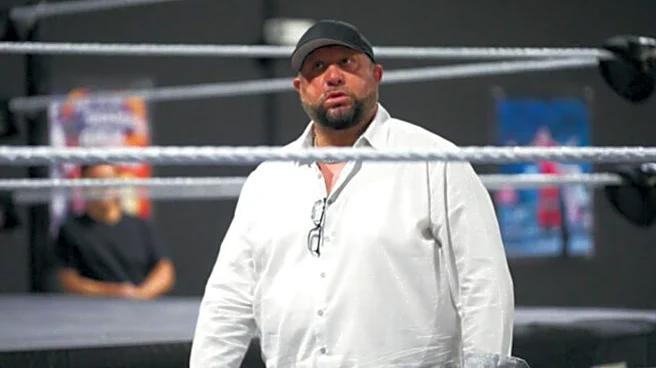
Avery Styles, the son of wrestling legend AJ Styles, has officially debuted in TNA Wrestling. This move has garnered attention, particularly from WWE Hall of Famer Bully Ray, who views TNA as an ideal starting point for the second-generation wrestler.
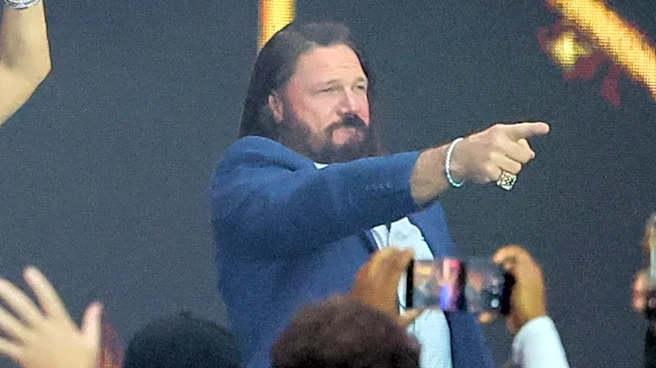
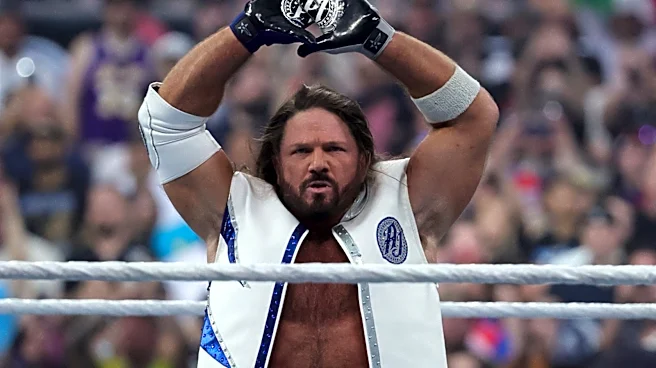
Ray emphasized the importance of Avery forging his own identity rather than being solely defined by his father's significant legacy in the sport. AJ Styles himself achieved Grand Slam Champion status and is considered a future Hall of Famer within TNA, having played a crucial role in establishing the X-Division. Avery's initial appearance in TNA saw him interact with Frankie Kazarian, a long-time friend of his father. Kazarian offered Avery a warning about the TNA locker room dynamics but also pledged his loyalty and support to the young talent. This storyline is seen as a logical progression that leverages the family name while allowing Avery to develop his unique path in professional wrestling.
Why It's Important?
Avery Styles' entry into TNA Wrestling carries significant implications for both the individual and the promotion. For Avery, it represents the beginning of his professional wrestling career under the immense shadow of his father, AJ Styles, one of the most renowned figures in TNA and WWE history. This provides him with immediate name recognition but also the challenge of establishing his own identity and skill set. For TNA, signing a second-generation talent with such a prominent lineage can attract new viewers and generate buzz, potentially boosting its viewership and market presence. The narrative of Avery navigating his father's legacy, coupled with the mentorship and warnings from established figures like Frankie Kazarian, creates compelling storytelling opportunities that can resonate with long-time wrestling fans. This strategic signing could help TNA cultivate future stars and maintain its relevance in the competitive landscape of professional wrestling, especially as it positions itself as a developmental ground where talents can hone their skills before potentially moving to larger promotions like WWE, as suggested by Bully Ray.
What's Next?
Following his debut, Avery Styles is expected to continue his development within TNA Wrestling. The ongoing storyline involving Frankie Kazarian suggests a mentorship or alliance, which could evolve into a significant narrative arc. Bully Ray's comments indicate that TNA is seen as a crucial stepping stone for Avery to gain experience and refine his craft, with the potential for WWE to monitor his progress. This implies that Avery's journey in TNA might be a foundational period, allowing him to build a reputation and skill set before potentially considering opportunities with larger promotions. Fans can anticipate watching Avery's in-ring debut and subsequent matches, observing how he adapts to the professional wrestling environment and whether he can carve out a distinct identity separate from his father's legendary career. The focus will likely be on his growth as a performer and how TNA utilizes his unique position to create engaging storylines.
Beyond the Headlines
The debut of Avery Styles in TNA highlights a broader trend in professional wrestling: the emergence of second and third-generation talents. This phenomenon often brings a blend of nostalgia and fresh narratives, as fans are invested in seeing how the offspring of wrestling legends will fare. It raises questions about legacy, identity, and the pressures of living up to a famous name. For Avery, the challenge will be to leverage his lineage for initial recognition while simultaneously demonstrating unique abilities and a distinct persona to avoid being perpetually compared to his father. This situation also underscores the cyclical nature of the wrestling industry, where established stars often contribute to the development of new talent, either directly through coaching or indirectly through their children entering the business. The dynamic between Avery and Frankie Kazarian, a contemporary of AJ Styles, adds a layer of intergenerational storytelling, exploring themes of trust, guidance, and the complexities of the locker room environment. This narrative can delve into the ethical considerations of mentorship and the balance between protecting young talent and allowing them to face challenges independently.