






What's Happening?
Inception Labs has announced the impending shutdown of its Mercury API, including Mercury 3, Mercury Voice, and Mercury Decide models, effective December 28, 2026. Customers using `api.inceptionlabs.ai` are advised to migrate their applications to alternative
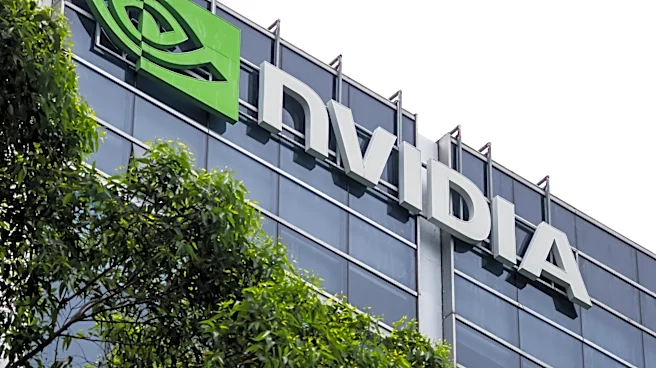
providers before this date, as access to the service and any data submitted to the platform will be lost. The company's documentation cites "careful consideration" as the reason for the wind-down, without providing further specifics or mentioning potential refunds or enterprise contracts. This announcement comes amidst unconfirmed reports from The Information on November 19, 2026, suggesting that Nvidia is nearing an acquisition of Inception Labs for over $500 million. Neither Inception Labs nor Nvidia has publicly confirmed the deal. The shutdown notice predates the acquisition reports, with a customer email relaying the December 28 date as early as November 12, 2026. Inception Labs' standard terms of use allow the company to terminate services at its discretion and cap liability, offering self-serve customers limited recourse beyond refund inquiries.
Why It's Important?
The shutdown of Inception Labs' Mercury API has significant implications for its customers, particularly those who have integrated Mercury models into latency-sensitive features or relied on its competitive pricing. The company's diffusion LLMs were noted for their speed and cost-effectiveness, offering some of the cheapest per-token pricing in the market. Customers will now face the challenge of finding and migrating to new providers, which may entail higher costs and potential performance trade-offs. The unconfirmed acquisition talks with Nvidia add a layer of uncertainty, as it is unclear whether Nvidia would choose to serve these models itself post-acquisition. This situation highlights the risks associated with relying on third-party API services, especially for startups or smaller companies that may lack the resources for rapid migration or negotiation of favorable terms. The event also underscores the dynamic nature of the AI industry, where rapid technological advancements and corporate consolidations can quickly alter the landscape for users and developers.
What's Next?
Customers of Inception Labs' Mercury API must prioritize migrating their applications before the December 28, 2026, deadline. This involves identifying all instances where `api.inceptionlabs.ai` or Mercury model IDs are used, downloading request logs, invoices, and billing history, and inquiring about the fate of retained data and prepaid balances. Engineering teams are advised to select and test replacement providers, focusing on latency, accuracy, and cost, and to implement routing solutions to facilitate future transitions. For customers accessing Mercury through cloud marketplaces like Amazon Bedrock or Azure, it is crucial to contact their account teams to ascertain the status of their subscriptions post-December 28. The unconfirmed Nvidia acquisition could potentially alter the situation, but customers are urged to proceed with migration plans regardless, as Inception's public API is set to close. The outcome of the Nvidia deal, if confirmed, will determine whether the Mercury models might reappear under a new provider, but for now, the focus remains on ensuring service continuity through alternative solutions.
Beyond the Headlines
The situation with Inception Labs and its Mercury API shutdown, coupled with the unconfirmed Nvidia acquisition, points to broader trends within the artificial intelligence and tech industries. It highlights the increasing consolidation of AI capabilities within larger tech giants, as smaller, innovative companies with specialized technologies become attractive acquisition targets. This can lead to both advancements and disruptions, as acquired technologies may be integrated into broader ecosystems or, as in this case, discontinued as standalone services. The event also raises questions about data governance and customer recourse in the event of service termination, particularly concerning data retention and the transferability of service level agreements. The competitive landscape for LLMs, characterized by rapid innovation and aggressive pricing strategies, means that customers are constantly evaluating providers based on performance, cost, and reliability. The emphasis on diffusion LLMs, as pioneered by Inception, suggests a shift in how language models are developed and deployed, potentially favoring speed and efficiency over traditional autoregressive methods, a development that larger players like Nvidia would be keen to integrate.