





What's Happening?
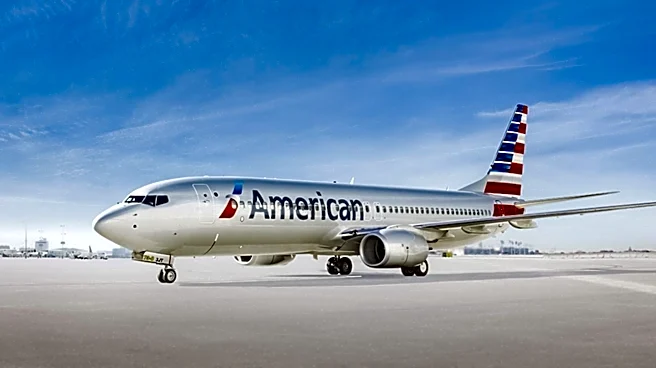
American Airlines Group (AAL) is currently under investor scrutiny as its stock trades near US$13, following an 11.7% decline over the past 30 days and a 15.4% drop year-to-date. Despite these recent downturns, the stock maintains a positive 4.6% return
over the last year. The prevailing narrative among many investors suggests that American Airlines Group is undervalued, with a fair value estimate of $18.37, indicating a potential 29% upside from its current trading price of $13.10. This valuation is supported by factors such as the growth in AAdvantage loyalty program members and a new 10-year Citi card agreement set to launch in 2026, which are expected to boost high-margin partnership revenue and stabilize earnings. Additionally, the anticipated delivery of new, fuel-efficient aircraft and moderate long-term capital expenditure plans are projected to reduce unit costs and improve net margins.
Why It's Important?
The current situation with American Airlines Group is important for the U.S. economy and the airline industry. As a major U.S. carrier, its financial health and stock performance can reflect broader trends in travel demand, fuel costs, and labor relations. The perceived undervaluation, coupled with strategic initiatives like loyalty program expansion and fleet modernization, could signal a potential recovery or growth phase for the company, impacting investors and the broader market. However, the risks associated with higher labor and fuel costs, along with significant debt, highlight the precarious balance within the airline sector. The outcome for American Airlines Group could influence investment decisions across the transportation industry and serve as an indicator of consumer confidence in air travel.
What's Next?
Investors and analysts will be closely monitoring American Airlines Group's performance, particularly its ability to manage rising labor and fuel costs, which could squeeze already thin margins. The successful implementation of the new 10-year Citi card agreement in 2026 will be crucial for expanding high-margin partnership revenue and stabilizing earnings. The company's progress in integrating new, fuel-efficient aircraft into its fleet will also be a key factor in reducing unit costs and improving profitability. Stakeholders will be looking for clear indications that the company can leverage these strategic tailwinds to overcome financial challenges and realize its estimated fair value. Future earnings reports and management guidance on cost control and revenue growth will be critical in shaping investor sentiment.
Beyond the Headlines
Beyond the immediate financial metrics, the situation with American Airlines Group reflects deeper trends in the U.S. airline industry. The emphasis on loyalty programs and co-branded credit cards highlights the increasing importance of ancillary revenues and customer retention in a highly competitive market. The push for fuel-efficient aircraft also underscores the industry's ongoing efforts to address environmental concerns and operational costs, which are becoming increasingly significant. The challenges posed by labor negotiations and fluctuating fuel prices are systemic issues that affect all major carriers, indicating the need for robust financial strategies and adaptable business models. The long-term success of American Airlines Group will depend not only on its internal strategies but also on its ability to navigate these broader industry dynamics and economic shifts.