
What's Happening?
Kevin Mayer, founder of Candle Media and former Chief Strategy Officer at Disney, has highlighted that slowing revenue growth is a primary driver behind the current wave of consolidation within the media
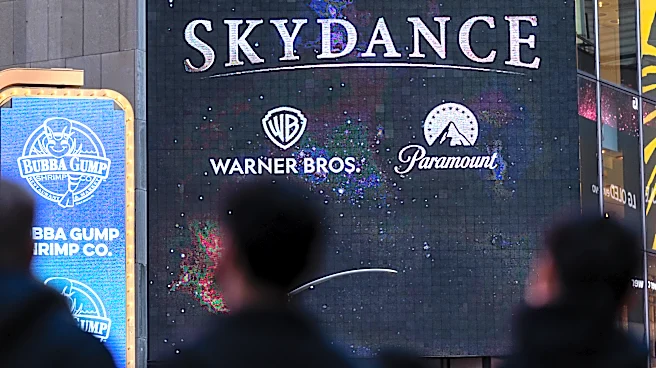
industry. Speaking at Doha Industry Days, Mayer drew upon his extensive experience with major media acquisitions, including Disney's purchases of 21st Century Fox, Pixar, Marvel, Lucasfilm, and BAMTech. He noted that companies like Warner Brothers, Paramount, and Skydance are combining, and NBCUniversal is making moves with Comcast, as media ecosystems seek to consolidate. Mayer explained that strategic separations, such as NBCUniversal's cable networks from its studio and streaming operations, often precede further combinations. This trend is rooted in financial realities: as growth decelerates, companies aim to distribute existing revenues over a smaller cost base. Mayer anticipates this consolidation process will continue for several more years. He also discussed Candle Media's own acquisition strategy, citing the successful integration of Moonbug Entertainment, which owns CoComelon, by allowing creative autonomy.
Why It's Important?
The ongoing consolidation in the media sector, as described by Kevin Mayer, signifies a significant shift in the U.S. entertainment and media landscape. This trend impacts major studios, streaming services, and content creators by reshaping market competition and potentially altering consumer access to diverse content. For large media conglomerates, consolidation offers opportunities to achieve economies of scale, reduce operational costs, and strengthen their market position against competitors. However, it could also lead to reduced competition, potentially affecting content diversity and pricing for consumers. Smaller production companies and independent creators might find it harder to compete or secure distribution deals in an increasingly consolidated market. The strategic decisions made by industry leaders like Mayer, who emphasizes careful integration to avoid cultural clashes, are crucial for the long-term success of these mergers and acquisitions, influencing the future of media consumption and production in the U.S.
What's Next?
According to Kevin Mayer, the trend of media consolidation is expected to persist for several more years, indicating that the industry will likely see further mergers, acquisitions, and strategic realignments. This suggests that major players will continue to evaluate their assets and seek opportunities to combine operations, reduce costs, and enhance their market share. Companies like Warner Brothers, Paramount, and NBCUniversal are likely to continue exploring various combinations and divestitures to optimize their portfolios in response to financial pressures and evolving consumer habits. Stakeholders, including investors, content creators, and consumers, should anticipate ongoing shifts in ownership, content distribution strategies, and potentially new subscription models. The emphasis on maintaining creative autonomy, as demonstrated by Disney's approach with Pixar and Marvel, will be a critical factor in the success of future integrations, influencing how acquired entities perform and contribute to the larger conglomerate's value.
Beyond the Headlines
The drive for media consolidation, as articulated by Kevin Mayer, extends beyond immediate financial pressures to touch upon deeper implications for creative industries and cultural production. The emphasis on integrating acquired companies while preserving their creative autonomy, as Disney did with Pixar and Marvel, highlights a critical challenge: balancing corporate synergy with artistic integrity. If not managed carefully, consolidation could lead to a homogenization of content, as larger entities prioritize commercially viable projects over diverse or niche storytelling. This could impact the independent film and television ecosystem, potentially limiting opportunities for emerging voices and experimental content. Furthermore, the increasing concentration of media ownership raises questions about market power and potential antitrust concerns, as fewer companies control a larger share of content creation and distribution. The long-term cultural impact of these mergers will depend on whether the consolidated entities foster innovation and diversity or succumb to a more uniform, profit-driven content strategy.