





What's Happening?
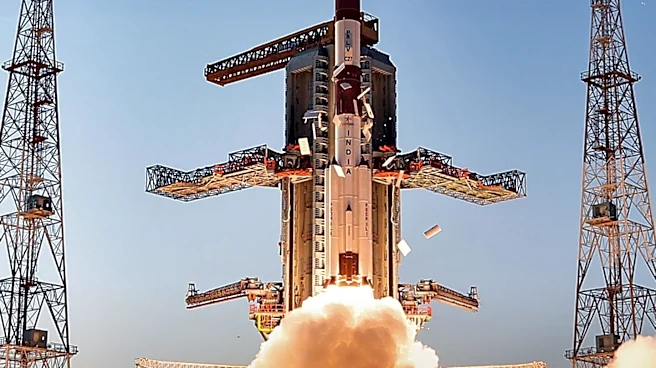
India's space economy has expanded to approximately $9 billion, an increase from $8.4 billion in 2023. This growth is largely attributed to the increasing involvement of private players, with the number of registered space sector startups rising from one
in 2014 to 440. Cumulative investment in Indian space startups has seen a significant surge, growing over six-fold from $100.5 million in 2021-22 to $618.5 million by March 31, 2026. The Indian government initiated major space-sector reforms on June 24, 2020, to encourage private enterprise participation. These reforms led to the establishment of NewSpace India Limited (NSIL) as the commercial arm of the Department of Space and the Indian National Space Promotion and Authorisation Centre (IN-SPACe) as a single-window interface for private entities. As of January 31, 2026, IN-SPACe facilitated 71 technology transfers and granted 113 authorizations to 52 non-government entities, including 18 startups. Six Indian non-government entities have launched 18 satellites, and 25 payloads were flown or scheduled on POEM platforms.
Why It's Important?
The significant growth of India's space economy and the surge in private sector involvement mark a pivotal shift from a government-led framework to a collaborative public-private model. This transformation is crucial for India's global competitiveness in the commercial space market, attracting foreign direct investment, and fostering innovation. The increased participation of startups and private companies creates new job opportunities, drives technological advancements, and diversifies the nation's economic base. The reforms also position India as a more attractive partner for international space collaborations, expanding its global influence in space technology and exploration. This shift could lead to more cost-effective and efficient space missions, benefiting various sectors through advanced satellite services and data.
What's Next?
The trajectory of India's space economy suggests continued growth, with further private sector investment and innovation expected. The government's supportive policies, including the role of IN-SPACe and NSIL, will likely encourage more startups and established companies to enter the space sector. Future developments may include an increase in satellite launches by private entities, further technology transfers, and expanded international partnerships. The focus on commercializing space technologies and services will likely lead to new applications in communication, navigation, earth observation, and beyond. The success of these reforms could serve as a model for other nations looking to boost their space capabilities through private sector engagement.
Beyond the Headlines
The evolution of India's space program from a predominantly state-controlled endeavor to one embracing private enterprise reflects a broader global trend towards commercialization of space. This shift raises important questions about intellectual property rights in space, the regulation of private space activities, and the potential for increased space debris. The emphasis on private innovation could also lead to a more competitive and dynamic space industry, potentially lowering costs and increasing access to space for various applications. Furthermore, the success of Indian startups in this high-tech sector could inspire entrepreneurship in other emerging economies, demonstrating the potential for rapid technological advancement with strategic government support and private initiative.