





What's Happening?
Tether Gold (XAUt) is a digital token that represents direct ownership of physical gold, with each XAUt token backed 1:1 by one fine troy ounce of physical gold meeting the London Good Delivery standard. This gold is stored in high-security vaults located
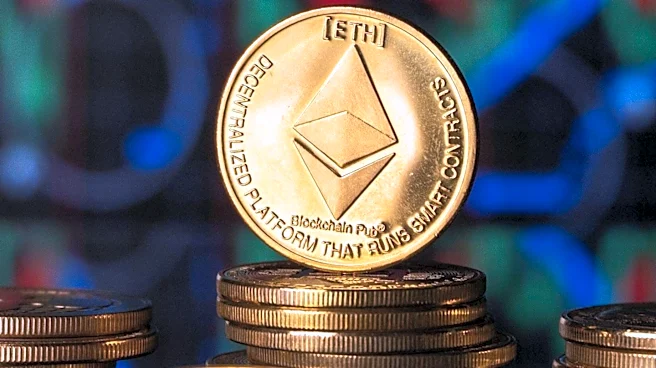
in Switzerland. The token aims to merge the historical value of gold with the efficiency and transparency of blockchain technology. XAUt tokens are minted only when an equivalent amount of gold is verified and vaulted by the custodian, TG Commodities S.A. de C.V. Holders can verify the specific gold bars backing their tokens through an online allocation tool provided by Tether, ensuring transparency. This tokenization allows for fractional ownership, enabling individuals to own as little as 0.000001 of an ounce of gold, making it more accessible than traditional physical gold investments. XAUt operates on blockchains like Ethereum and BNB Chain, facilitating 24/7 trading and low-cost transfers, bypassing the logistical challenges associated with holding physical bullion.
Why It's Important?
The introduction and growth of Tether Gold (XAUt) are significant for the U.S. and global financial markets as it represents a leading commodity in the burgeoning tokenized real-world asset (RWA) sector. This development provides a digital, programmable form of gold that can be integrated into decentralized finance (DeFi) applications. This integration allows XAUt to be used as collateral, for lending, and for yield generation within the DeFi ecosystem. For investors, XAUt offers a way to combine the stability of a traditional store of value, like gold, with the flexibility and transparency of blockchain infrastructure. This could attract a new demographic of investors who are comfortable with digital assets but also seek the security of gold. The ability to trade gold 24/7 with low transaction costs and fractional ownership could democratize access to gold investment, potentially impacting traditional gold markets and investment vehicles by offering a more liquid and accessible alternative.
What's Next?
The continued growth of Tether Gold (XAUt) is expected to further solidify the role of tokenized real-world assets within the broader financial landscape. As more investors and institutions become comfortable with digital assets, the demand for stable, gold-backed tokens like XAUt is likely to increase. This could lead to greater adoption of XAUt in various DeFi protocols, expanding its utility beyond simple ownership to more complex financial instruments. There may also be increased scrutiny from regulatory bodies regarding the backing and transparency of such tokens, potentially leading to new regulations or standards for tokenized assets. The success of XAUt could also encourage other companies to tokenize various real-world assets, further blurring the lines between traditional finance and the digital asset space. Additionally, the development of more user-friendly platforms and interfaces for managing and trading XAUt will be crucial for its widespread adoption, potentially attracting a broader range of investors.
Beyond the Headlines
The tokenization of physical gold through XAUt has deeper implications for the future of asset ownership and financial systems. It challenges the traditional notions of physical possession and custody, offering a digital alternative that is more liquid and divisible. This shift could lead to a re-evaluation of how assets are valued, traded, and secured. Ethically, the transparency offered by blockchain, where holders can verify the specific gold bars backing their tokens, addresses concerns about the integrity and backing of digital assets. Legally, the framework for ownership and redemption of physical gold through a digital token will continue to evolve, potentially setting precedents for other tokenized assets. Culturally, it represents a significant step in the mainstream adoption of blockchain technology, demonstrating its capability to transform even the most traditional asset classes. This development could accelerate the broader trend of digital transformation in finance, leading to more interconnected and efficient global markets.