


What's Happening?
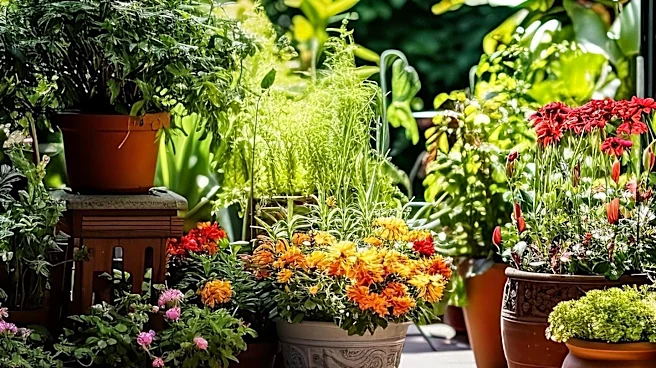
Landscape designers are increasingly using container gardens to maintain visual appeal in outdoor spaces during the cooler months of fall and winter. These portable arrangements offer flexibility, allowing homeowners to add color and texture to entrances
or patios. A common technique involves combining a 'thriller' for height, a 'filler' for body, and a 'spiller' for edging to create a full, textured look. Recommended plant choices for this season include compact evergreens or ornamental grasses for height, pansies for filling, and ivy for cascading over the edges. An alternative modern approach involves planting a single variety densely within a container for a simpler aesthetic. This strategy helps transition gardens from the vibrant summer and fall into the quieter winter months, ensuring continuous visual interest.
Why It's Important?
The adoption of container gardening by landscape designers for cooler seasons highlights a growing trend in horticultural practices aimed at extending the aesthetic and functional use of outdoor living spaces year-round. This approach offers significant benefits for homeowners, particularly those in urban or suburban areas with limited garden space, by providing versatile and movable decor. It also supports the nursery and gardening industry by promoting the sale of cool-season plants and related products like containers, soil, and fertilizers. For landscape professionals, mastering these techniques can differentiate their services and cater to client demands for sustained garden beauty, potentially increasing business opportunities and client satisfaction. The emphasis on specific plant combinations also educates consumers on effective planting strategies, fostering more successful gardening experiences.
What's Next?
As this trend gains momentum, it is likely that more nurseries and garden centers will expand their offerings of cool-season plants suitable for container gardening. Educational workshops and online resources focusing on fall and winter container design may also become more prevalent, catering to both professional landscapers and amateur gardeners. We can anticipate innovations in container materials and designs that offer better insulation and drainage for colder climates, further enhancing the viability and ease of winter container gardening. Additionally, the integration of smart gardening technologies, such as self-watering systems or temperature-controlled containers, could emerge to simplify maintenance and optimize plant health during challenging weather conditions.
Beyond the Headlines
Beyond the immediate aesthetic and commercial benefits, the increased focus on year-round container gardening reflects a broader cultural shift towards maximizing the utility and enjoyment of home environments, regardless of season. This practice can contribute to mental well-being by providing continuous engagement with nature, even when traditional garden beds are dormant. Environmentally, it encourages biodiversity in urban settings and can help mitigate the 'winter blues' often associated with stark, colorless landscapes. The creative challenge of designing these seasonal displays also fosters a deeper appreciation for horticultural artistry and the resilience of plant life, transforming what was once a dormant period into an opportunity for sustained beauty and engagement.