








What's Happening?
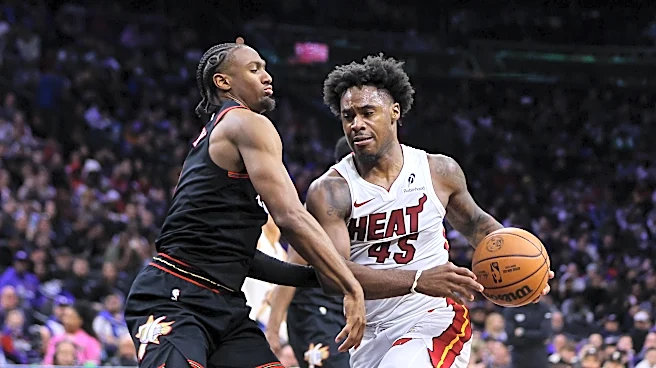
Jaylen Brown, a prominent All-NBA wing, has been traded from the Boston Celtics to the Philadelphia 76ers. This move marks a significant shift in the NBA landscape, as Brown has been a key player for the Celtics. The trade has sparked discussions about
how Brown will perform outside of Boston, where he has spent his entire professional career. The decision to trade Brown comes amid ongoing evaluations of team strategies and player performances, with analytics playing a crucial role in these decisions. The Celtics' decision to part ways with Brown suggests a strategic shift, possibly aiming to restructure their team dynamics and performance.
Why It's Important?
The trade of Jaylen Brown to Philadelphia is significant for several reasons. Firstly, it alters the competitive balance within the NBA's Eastern Conference, potentially strengthening the 76ers' roster. Brown's performance in Philadelphia will be closely watched, as it could influence the team's success in upcoming seasons. For the Celtics, this trade represents a major change in their lineup, which could impact their performance and strategy moving forward. The use of analytics in making such decisions highlights the growing importance of data-driven strategies in professional sports, influencing team management and player evaluations.
What's Next?
Following the trade, both the Celtics and the 76ers will need to adjust their strategies to accommodate the changes in their rosters. The 76ers will likely focus on integrating Brown into their team dynamics, optimizing his strengths to enhance their performance. Meanwhile, the Celtics may explore further trades or acquisitions to fill the gap left by Brown's departure. Fans and analysts will be keenly observing how these changes affect both teams' performances in the upcoming NBA season. Additionally, the trade may prompt other teams to reevaluate their strategies and consider similar moves.