









What's Happening?
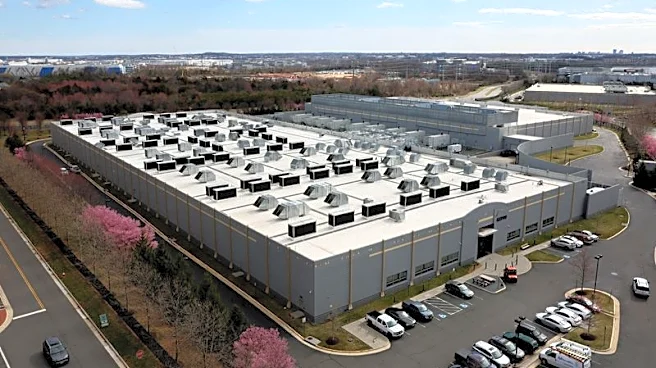
Goldman Sachs has raised concerns about the rapid increase in debt among major companies investing in artificial intelligence (AI) infrastructure. The six largest AI spenders, including Microsoft, Amazon, and Alphabet, have issued $244 billion in bonds
this year, a significant increase from previous years. This surge in borrowing is driven by the need to fund data centers, expand energy capacity, and secure computing resources. The leverage ratios of these companies have doubled in a short period, indicating a heavy reliance on debt to finance AI projects. Credit markets are showing signs of concern as borrowing outpaces cash generation, with credit default swap spreads widening significantly.
Why It's Important?
The rapid accumulation of debt to fund AI infrastructure could have significant implications for the financial stability of these companies and the broader market. If the investments do not yield expected returns, it could lead to financial strain and increased risk of default. This situation highlights the challenges of balancing innovation with financial prudence. The concerns raised by Goldman Sachs may prompt investors to reassess the sustainability of current AI investment strategies and the potential risks associated with high leverage.
What's Next?
As the AI arms race continues, companies may need to demonstrate the viability and profitability of their investments to reassure investors. There could be increased scrutiny on the financial health of these companies and their ability to generate returns from AI projects. Stakeholders, including investors and regulators, may push for more transparency and accountability in AI spending. The market may also see a shift towards more sustainable investment practices to mitigate the risks associated with high levels of debt.