





What's Happening?
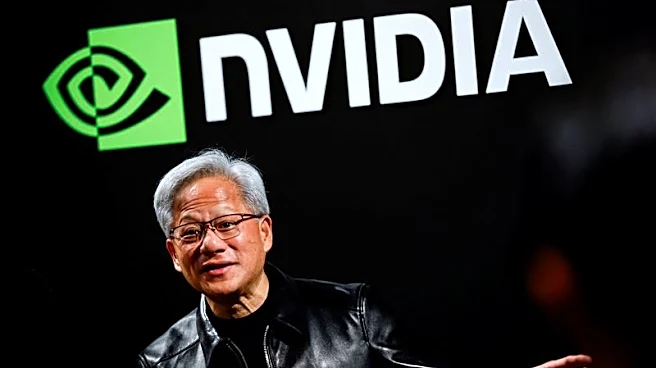
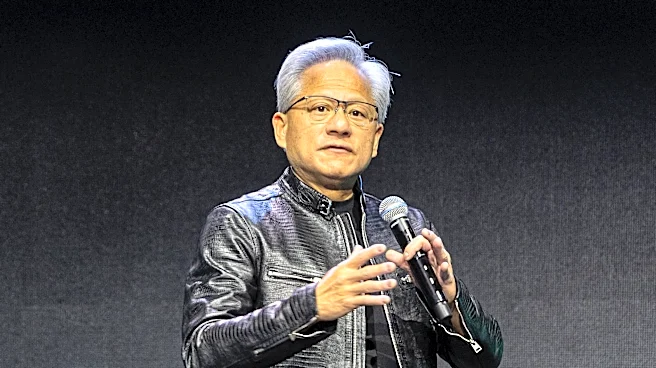
Deepwater Asset Management's Gene Munster has identified Nvidia's primary long-term challenge as finding a successor to CEO Jensen Huang who can maintain the company's founder-led culture and relentless sense of urgency. Munster attributes Nvidia's extraordinary
growth, from $27 billion in 2022 to an estimated $415 billion in 2026, directly to Huang's leadership. Huang has been central to Nvidia's transformation from a graphics chipmaker to a dominant AI infrastructure provider, building the CUDA software ecosystem and expanding into emerging markets like physical AI. Munster points to other successful tech founders such as Apple's Steve Jobs, Google's Larry Page and Sergey Brin, Meta's Mark Zuckerberg, Palantir's Alex Karp, and Tesla's Elon Musk as examples of leaders whose urgency was critical to their companies' success. He notes that Apple and Google faced struggles after their founders stepped away, highlighting the difficulty of sustaining original entrepreneurial drive.
Why It's Important?
This analysis underscores the critical role of founder-led leadership in driving innovation and growth within the U.S. technology sector. The departure of a visionary founder like Jensen Huang could significantly impact Nvidia's future trajectory and its dominant position in the AI market. The challenge of finding a successor with a similar 'sense of urgency' is not unique to Nvidia; it reflects a broader concern across the tech industry about leadership transitions and the sustainability of innovation post-founder. For investors, this raises questions about long-term value and risk, as companies heavily reliant on a single leader's vision may face instability or a slowdown in growth when that leadership changes. The discussion also highlights the potential for a shift in corporate culture from a 'wartime mentality' to a more conventional management approach, which could affect competitiveness and market responsiveness.
What's Next?
Nvidia's board will face the significant task of identifying and grooming a successor who can emulate Huang's unique leadership style and maintain the company's aggressive growth trajectory. This process will likely involve a careful internal assessment of potential candidates or an external search for a leader with a proven track record of driving innovation and market dominance. The company's ability to articulate a clear succession plan and demonstrate continuity in its strategic vision will be crucial for investor confidence. Furthermore, the broader tech industry will likely observe Nvidia's transition closely, as it could set a precedent for how other founder-led companies manage similar leadership changes. The success or struggles of Nvidia post-Huang could influence corporate governance strategies and succession planning across the U.S. tech landscape.
Beyond the Headlines
The emphasis on 'founder-led urgency' delves into the psychological and cultural aspects of corporate leadership. It suggests that certain personality traits—a relentless drive, a 'constant wartime mentality'—are not just beneficial but perhaps essential for achieving and sustaining hyper-growth in highly competitive sectors like AI. This raises questions about whether such leadership can be replicated or if it's an inherent quality of a select few. The concept also touches upon the 'cult of personality' often associated with tech founders, where their individual vision becomes inextricably linked to the company's identity and market perception. The long-term implication is a potential re-evaluation of leadership models in tech, moving beyond traditional corporate structures to perhaps prioritize entrepreneurial zeal and visionary leadership even in mature companies, or conversely, developing systems that can institutionalize such urgency beyond a single individual.