


What's Happening?
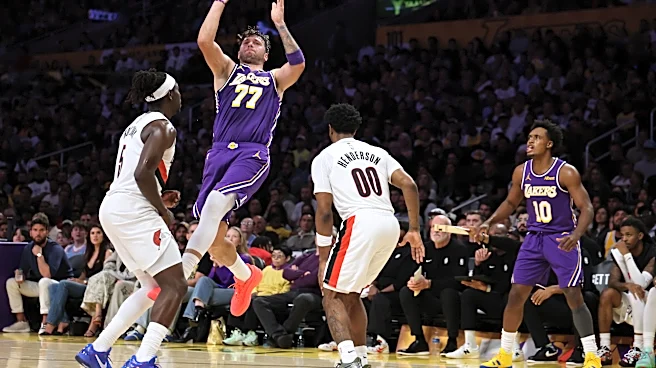
Recent NBA trade speculation has suggested a deal between the Portland Trail Blazers and the Charlotte Hornets, involving Portland sending guard Scoot Henderson, draft capital (including the Orlando Magic's 2028 first-round pick), and salary filler to
Charlotte in exchange for Naz Reid. This rumor has generated considerable online discussion, particularly given Charlotte's current perimeter depth issues and sidelined secondary guard options. However, an analysis of Charlotte's roster makeup and long-term strategy indicates that such a trade would not be beneficial. Scoot Henderson, despite his raw athleticism, struggles with three-point efficiency and decision-making, which would exacerbate Charlotte's existing turnover problems and lack of floor spacing. Furthermore, trading Naz Reid would create a significant void in Charlotte's frontcourt, as he provides valuable shooting, secondary ball-handling, and versatility at multiple frontcourt positions.
Why It's Important?
This trade rumor highlights the complexities of roster construction and strategic planning in the NBA. For the Charlotte Hornets, acquiring a high-lottery guard like Henderson might seem appealing on the surface, but a deeper look reveals a mismatch with their current needs and timeline. The team is already struggling with offensive execution and high turnover rates, and adding another non-spacing, high-usage guard would likely compound these issues rather than solve them. Losing Naz Reid, a productive modern big man who offers floor spacing and frontcourt versatility, would further weaken the team by creating an immediate hole at power forward. This scenario underscores the importance of fit and strategic alignment over simply accumulating talent, especially for a team in a rebuilding phase. The proposed trade would disrupt the team's functional structure and delay meaningful progress.
What's Next?
The Charlotte Hornets are expected to prioritize patience and a long-term build, as indicated by their previous moves and stated franchise direction. This means they are unlikely to pursue trades that involve taking on reclamation projects or sacrificing functional pieces for distant draft picks that do not align with their immediate developmental needs. The team will likely continue to focus on establishing habits and developing their current roster, even amidst injuries and losses. For the Portland Trail Blazers, their interest in a player like Naz Reid suggests a desire to add frontcourt versatility. However, without a willing trade partner in Charlotte, they will need to explore other options to address their roster needs. The ongoing trade deadline period will likely see continued speculation, but the Hornets' current strategy suggests they will resist moves that do not clearly advance their long-term vision.
Beyond the Headlines
This trade rumor also touches upon the broader issue of how NBA teams manage player development and roster construction in a league increasingly focused on specific player archetypes and strategic fits. The idea of trading a proven, versatile player like Reid for a developing guard with significant flaws, even with draft capital, illustrates the tension between acquiring potential and maintaining functional team chemistry. For teams in a rebuilding phase, the temptation to accumulate draft assets and high-potential young players can sometimes overshadow the need for players who fit a coherent system and address immediate on-court deficiencies. This situation also highlights the role of social media and fan speculation in driving narratives around potential trades, often without a full understanding of a team's strategic objectives or roster constraints.