
What's Happening?
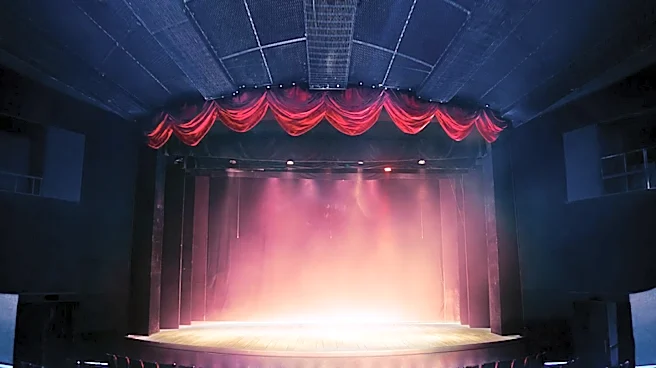
Netflix commissioned a filmed performance of 'Diana the Musical,' initially hoping it would be a major success after its run at La Jolla Playhouse and anticipated Broadway debut. The production was filmed in an empty
Broadway theater and released to streaming, aiming to generate hype for its eventual stage run. However, the musical failed to crack Netflix's Global Top 10 and was met with widespread ridicule from viewers. Despite significant promotion from Netflix, the show garnered negative reviews and became a subject of a 'hate-watch' trend in October 2021. When the actual stage musical eventually opened on Broadway, it closed after only 33 performances, significantly less than the average run of about 100 performances for a non-blockbuster show. Critics particularly highlighted the quality of the lyrics, comparing them to a blend of William McGonagall and Meghan Trainor, and noted the musical's perceived lack of nuance regarding British class politics and the royal family.
Why It's Important?
The commercial and critical failure of 'Diana the Musical' on Netflix and Broadway highlights the significant risks involved in adapting stage productions for streaming platforms, especially when attempting to build anticipation for a live theatrical run. This case demonstrates that a direct-to-streaming release, even with substantial promotional efforts, does not guarantee success or positive reception, and can even backfire by exposing a production to early, widespread negative sentiment. For the entertainment industry, particularly Broadway and streaming services, this serves as a cautionary tale regarding content strategy and audience engagement. It underscores the importance of critical reception and the potential for a streaming debut to either elevate or undermine a show's future prospects, impacting investment decisions and creative approaches for similar projects.
What's Next?
The immediate future for 'Diana the Musical' appears limited, given its short Broadway run and negative critical reception. The production's failure may lead to a reevaluation of strategies for bringing new musicals to a broader audience, particularly the decision to stream a filmed version before or concurrently with a live theatrical debut. Producers and streaming platforms might become more cautious about such pre-release strategies, potentially opting for more traditional theatrical runs to build critical acclaim and audience interest before considering a streaming adaptation. The experience could also influence how future stage-to-screen adaptations are marketed and presented, with a greater emphasis on quality control and ensuring the content resonates with both theater enthusiasts and a wider streaming audience.
Beyond the Headlines
The 'Diana the Musical' debacle also touches upon broader cultural implications, particularly the American interpretation of British history and royalty. The criticism regarding the musical's portrayal of British class politics and the royal family suggests a disconnect between the creators' intent and the audience's expectations for historical and cultural accuracy. This highlights the challenges of cross-cultural storytelling and the potential for misinterpretation or oversimplification when adapting narratives for a global audience. Furthermore, the 'hate-watch' phenomenon surrounding the musical reflects a contemporary trend in media consumption where audiences engage with content primarily for its perceived flaws or entertainment value derived from its poor quality, rather than its artistic merit. This trend can influence content creation, potentially leading to a focus on sensationalism or controversy over substance.