





What's Happening?
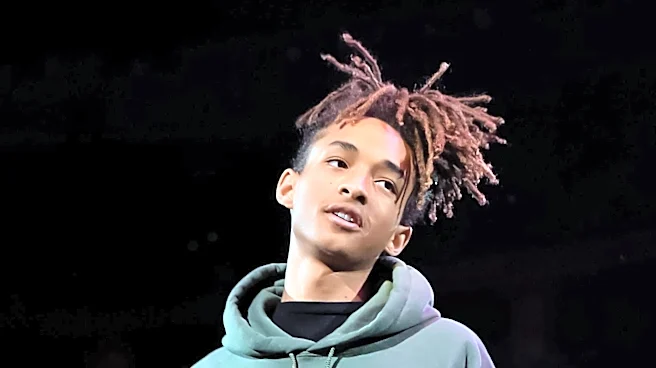
Social media rumors suggesting that Jaden Smith, the 28-year-old son of Will Smith and Jada Pinkett, is dating 82-year-old French fashion icon Michele Lamy have been debunked as an internet hoax. The rumors gained traction due to a significant 54-year
age gap between the two individuals. Viral photos and videos circulating on platforms like Instagram and X, which allegedly showed Smith and Lamy holding hands, kissing, and taking selfies, have been identified as AI-generated fabrications. Neither Jaden Smith nor Michele Lamy have confirmed any romantic involvement. Michele Lamy is notably married to fashion designer Rick Owens, with whom she shares a long-standing personal and professional partnership, having co-founded Owenscorp, a company involved in clothing, furniture, and other creative projects.
Why It's Important?
This incident highlights the growing challenge of distinguishing authentic information from AI-generated content on social media platforms. The rapid spread of fabricated images and narratives can lead to widespread misinformation, impacting public perception and potentially damaging individuals' reputations. For public figures like Jaden Smith, such hoaxes can create unnecessary personal and professional complications. The ease with which AI can create convincing but false visuals underscores the need for increased media literacy among social media users and the development of more robust verification tools by platform providers. The incident also demonstrates how quickly sensationalized, unverified stories can go viral, often overshadowing factual reporting and contributing to a climate of skepticism regarding online information.
What's Next?
The debunking of these rumors serves as a cautionary tale regarding the consumption and sharing of unverified content online. While the immediate impact on Jaden Smith and Michele Lamy may subside as the truth becomes more widely known, the broader issue of AI-generated misinformation will likely continue to be a significant challenge. Social media platforms may face increasing pressure to implement more effective mechanisms for identifying and flagging AI-generated content to prevent the spread of hoaxes. Users are encouraged to critically evaluate the source and authenticity of viral content, especially when it involves sensational claims or images that appear too perfect or unusual. The incident could also prompt further discussions about the ethical implications of AI technology and its potential for misuse in creating deceptive content.
Beyond the Headlines
The proliferation of AI-generated hoaxes like the Jaden Smith and Michele Lamy dating rumors points to a deeper societal challenge in the digital age: the erosion of trust in visual evidence. As AI technology becomes more sophisticated, the ability to create hyper-realistic fake images and videos will only improve, making it increasingly difficult for the average person to discern truth from fiction. This development has profound implications for journalism, public discourse, and even legal proceedings, where visual evidence has traditionally held significant weight. The incident also touches upon the cultural fascination with celebrity relationships and the willingness of some to believe and share sensational stories without critical examination. Addressing this trend will require a multi-faceted approach, including technological solutions, educational initiatives, and a collective commitment to responsible information sharing.