





What's Happening?
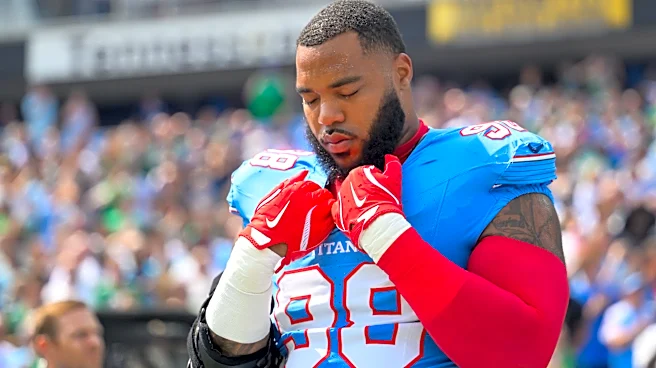
New York Giants head coach John Harbaugh reportedly made an unconventional move by directly contacting Tennessee Titans owner Amy Adams Strunk in an attempt to trade for All-Pro defensive tackle Jeffery Simmons. This action deviated from traditional NFL
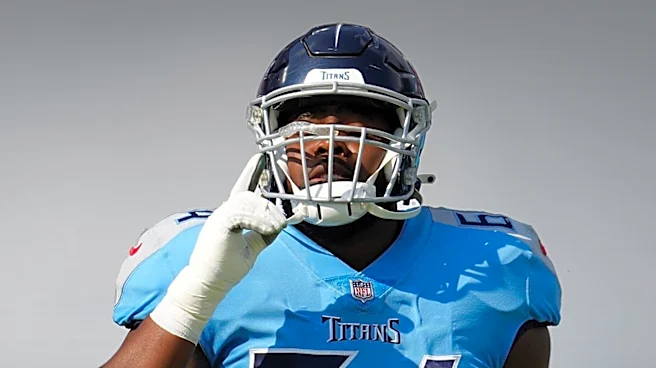
trade negotiation protocols, where general managers typically handle such discussions. According to The Athletic's Jonathan Jones, Harbaugh's call to Strunk occurred after Giants General Manager Joe Schoen had already been informed by Titans General Manager Mike Borgonzi that Simmons was not available for trade. Despite Harbaugh's direct appeal, Strunk upheld her general manager's decision, informing Harbaugh that Simmons was not for trade and that football decisions rested with Borgonzi. Ultimately, Simmons was traded to the Chicago Bears in a blockbuster deal that included multiple future draft picks.
Why It's Important?
This incident highlights the established, albeit unwritten, protocols within NFL front offices regarding player trades. Harbaugh's decision to bypass the Titans' general manager and directly approach the owner could be seen as an attempt to exert higher-level influence, potentially signaling a belief that an owner might override a general manager's decision. However, Strunk's firm stance in backing her general manager, Mike Borgonzi, reinforces the authority structure within the Titans organization and demonstrates a commitment to empowering her football operations staff. This event also underscores the competitive nature of NFL trades, where teams employ various strategies to acquire desired players, even if it means bending traditional norms. The outcome, with Simmons going to the Bears, indicates that even unconventional approaches do not guarantee success if the selling team's leadership is aligned.
What's Next?
While the immediate trade for Jeffery Simmons is concluded, the long-term implications of Harbaugh's approach could subtly influence future NFL trade dynamics. Other teams and coaches might observe this tactic and consider similar direct appeals, though the Titans' response suggests such moves may not be effective if ownership fully supports their general manager. For the Giants, this failed attempt means they will need to pursue other avenues to strengthen their defensive line. The Titans, having traded Simmons, will continue their rebuilding efforts with the draft capital acquired from the Bears. This event may also lead to internal discussions within the NFL about formalizing or reinforcing trade communication protocols to prevent similar bypasses in the future, although such unwritten rules often remain as they are.
Beyond the Headlines
Harbaugh's direct call to an opposing owner touches upon the delicate balance of power and communication within professional sports organizations. It raises questions about the chain of command and the respect for established roles in high-stakes negotiations. While Harbaugh reports directly to Giants ownership, his interaction with another team's owner could be perceived as undermining the role of general managers across the league. This situation also reflects the increasing pressure on coaches to secure top talent, sometimes leading to unconventional methods. The Titans' owner's response, however, serves as a strong affirmation of the general manager's autonomy in football operations, which could set a precedent for how other owners handle similar situations, reinforcing the traditional structure of NFL front offices.