






What's Happening?
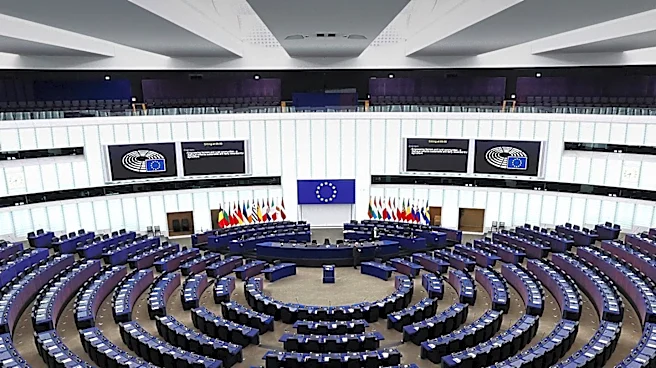
On November 19, 2026, the Council and Parliament of the European Union announced a provisional agreement on amendments to the Sustainable Finance Disclosure Regulation (SFDR 2.0). This updated regulation introduces three new categories for financial products:
'sustainable,' 'transition,' and 'ESG basics.' The 'sustainable' category is for products contributing to sustainability goals, while the 'transition' category is designed for products that channel investments into companies or projects actively moving away from unsustainable activities. The 'ESG basics' category covers products that integrate ESG approaches but do not meet the stricter criteria of the other two categories. This overhaul aims to simplify the framework, mitigate greenwashing risks, and encourage private investment in sustainable and transition-focused financial products. Products utilizing these new categories will need to meet a minimum 70% investment threshold aligned with their chosen sustainability strategy and exclude investments in harmful industries. The agreement also allows for investments in fossil fuel companies within the 'transition' category, provided these companies have a clear, time-bound strategy to reduce greenhouse gas emissions aligned with the Paris Agreement, allocate 20% of capital expenditure to EU taxonomy-aligned activities, and increase this share over time.
Why It's Important?
The introduction of SFDR 2.0 marks a significant shift from a disclosure-based regime to a sustainability labels regime, providing clearer definitions and eligibility criteria for financial products. This change is crucial for investors seeking to understand and compare sustainability-related financial products, potentially reducing confusion and increasing confidence in sustainable investments. By establishing defined categories with minimum thresholds, the EU aims to combat greenwashing, where products are marketed as sustainable without genuinely meeting environmental, social, or governance standards. The inclusion of a 'transition' category is particularly important as it acknowledges the need to finance companies that are not yet fully sustainable but are committed to a credible transition. This could unlock substantial private capital for industries undergoing decarbonization and other sustainability transformations, fostering a more robust market for green finance. The eligibility of general-purpose instruments from EU-established public sector bodies within the transition category also broadens the scope of eligible investments, potentially channeling more funds towards public sector sustainability initiatives.
What's Next?
The final text of SFDR 2.0 has not yet been published, meaning specific drafting and requirements for several key points are still pending. Once formally agreed upon by both the Council and Parliament, the final text will be published in the Official Journal of the EU. The regulation will then become applicable two years after its publication. Financial market participants will need to carefully review the final text to understand the precise eligibility criteria, calculation methodologies for investment thresholds, and the scope of exemptions, particularly for alternative investment funds offered exclusively to professional investors. The implementation period will allow financial institutions to adapt their product offerings, disclosure practices, and internal processes to comply with the new categorization and labeling requirements. This will likely involve significant adjustments in how financial products are designed, marketed, and reported, with a strong emphasis on verifiable sustainability claims.
Beyond the Headlines
The shift towards a product categorization regime with defined labels under SFDR 2.0 represents a deeper evolution in sustainable finance, moving beyond mere transparency to active standardization and quality control. This could set a precedent for other jurisdictions globally, influencing how sustainable investments are defined and regulated worldwide. The explicit inclusion of fossil fuel companies within the 'transition' category, under strict conditions, highlights a pragmatic approach to climate finance, recognizing that a complete divestment from such industries might not be feasible or desirable in the short term. Instead, it encourages and incentivizes these companies to actively decarbonize and align with climate goals. This nuanced approach could lead to more effective capital allocation towards real-world emissions reductions rather than simply shifting emissions to less transparent portfolios. Furthermore, the focus on reducing burdens on financial market participants while attracting private investment suggests a strategic effort to make sustainable finance more accessible and scalable, potentially accelerating the broader economic transition towards a greener economy.