






What's Happening?
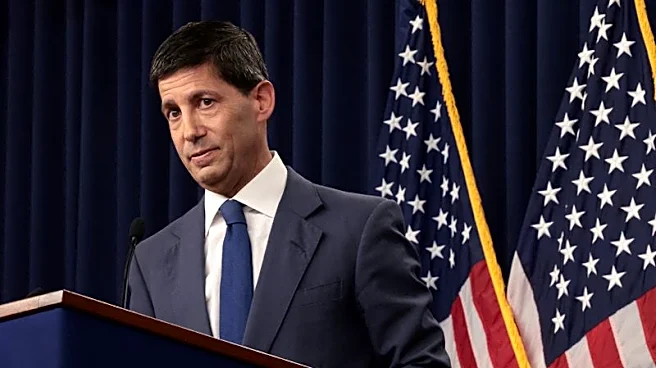
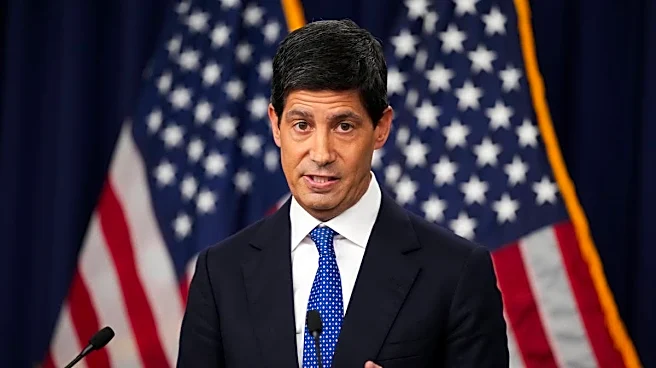
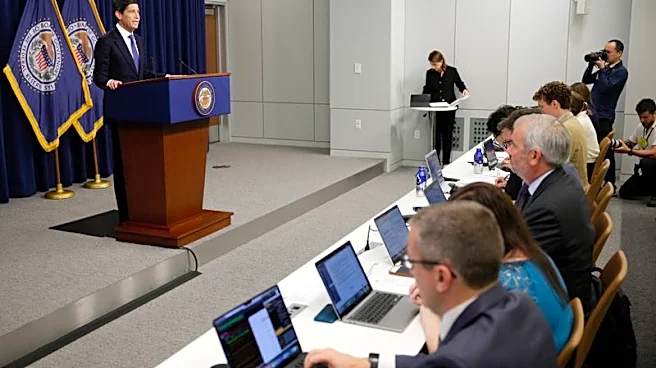
The Federal Open Market Committee (FOMC) of the Federal Reserve has voted unanimously (12-0) to raise the target range for the federal funds rate by 1/4 percentage point, setting it between 3-3/4 and 4 percent. This decision is made in support of the Federal Reserve's
dual mandate, which includes achieving maximum employment and price stability. The Committee noted that economic activity is expanding at a solid pace, with resilient domestic spending, strong productivity growth, robust capital investment, and stable job gains. Despite these positive indicators, inflation remains elevated. The Federal Reserve is also continuing its policy of maintaining ample reserves in the banking system.
Why It's Important?
This interest rate hike is a critical measure by the Federal Reserve to address persistent inflation, aiming to bring it back to the Committee's 2 percent target. By increasing the federal funds rate, the Fed makes borrowing more expensive, which can cool down economic activity, reduce demand, and ultimately curb price increases. This action impacts various sectors of the U.S. economy, including housing, consumer credit, and business investment. Higher interest rates can lead to increased costs for mortgages, car loans, and credit card debt for consumers, potentially slowing spending. For businesses, it means higher borrowing costs for expansion and operations. While intended to stabilize prices, there's a risk that aggressive rate hikes could slow economic growth too much, potentially leading to a recession. The unanimous vote signals strong consensus within the FOMC regarding the necessity of this action.
What's Next?
The Federal Reserve's primary goal with this action is to achieve a timelier return to its 2 percent inflation target. The Committee will continue to monitor economic data, including inflation rates, employment figures, and overall economic activity, to determine future monetary policy adjustments. Further rate hikes or pauses will depend on how the economy responds to current measures and whether inflation shows clear signs of moderating. Businesses and consumers should anticipate continued vigilance from the Fed regarding inflation, which may influence lending rates and economic conditions in the coming months. The Fed's commitment to price stability suggests that it will take further actions as deemed necessary to achieve its mandate.
Beyond the Headlines
The Federal Reserve's decision to raise interest rates reflects a delicate balancing act between controlling inflation and sustaining economic growth. This move has broader implications for global financial markets, as U.S. monetary policy often influences international capital flows and currency values. The 'elevated uncertainty owing, in part, to geopolitical developments' mentioned by the FOMC highlights how external factors can complicate domestic economic management. The Fed's actions are not just about numbers; they shape the economic environment for millions of Americans, affecting everything from job security to the cost of living. The ongoing challenge for the Fed is to navigate these complexities to achieve a 'soft landing' – bringing inflation down without triggering a severe economic downturn, a task that requires precise calibration and adaptability in a dynamic global landscape.