

What's Happening?
Spotify has officially rolled out its Artist Profile Protection tool to all artists on its platform. This new feature empowers musicians to control which releases are associated with their name, directly addressing the increasing influx of AI-generated
content and instances of impersonation on streaming services. The tool's full release follows an eight-month beta testing period involving thousands of artists. According to Spotify, this initiative aims to resolve a persistent industry issue where music is incorrectly attributed to artists due to deliberate impersonation, metadata errors, or shared names. The problem has escalated significantly, with Billboard reporting that Sony Music recently requested the removal of over 260,000 deepfake songs from digital platforms, a figure nearly double what was reported in March. Artists can activate this feature via 'Spotify for Artists' to receive alerts for new music submitted under their name and can subsequently disassociate themselves from any unauthorized releases. While releases are set to go live by default, an advanced setting allows artists to manually approve or reject every submission before it appears on their profile.
Why It's Important?
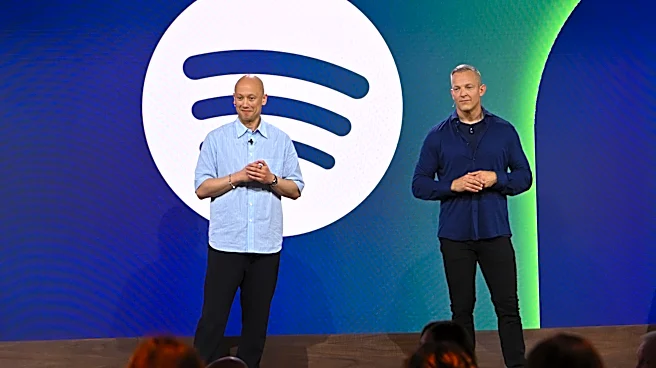
This development is significant for the music industry, particularly for artists struggling with identity theft and the proliferation of AI-generated content. The tool provides a crucial layer of defense for artists, ensuring the integrity of their discographies and protecting their intellectual property in an increasingly digital and AI-driven landscape. The rise in deepfake songs and unauthorized uploads not only dilutes an artist's brand but can also lead to financial losses and reputational damage. By giving artists direct control over their profiles, Spotify is setting a precedent that could influence other streaming platforms to adopt similar protective measures. This move also highlights the growing challenge that AI-generated content poses to content creators across various industries, necessitating robust technological solutions to safeguard authenticity and ownership. Sam Duboff, Spotify’s Global Head of Marketing and Policy, emphasized that artists should maintain control over their profiles and not find others' music under their name, positioning Spotify as a leader in addressing content mismatch.
What's Next?
The widespread adoption of Spotify's Artist Profile Protection tool is expected to significantly reduce instances of misattributed music and unauthorized AI-generated content on the platform. Other streaming services may feel pressure to develop and implement similar features to remain competitive and support their artist communities. This could lead to a broader industry standard for content verification and artist protection. Furthermore, the tool's effectiveness will likely be monitored closely by artists, labels, and industry watchdogs, potentially leading to further refinements or new features to combat evolving threats from AI. The music industry may also see increased discussions and collaborations on how to best manage and regulate AI-generated music to ensure fair compensation and proper attribution for human artists. The ongoing battle against deepfakes and impersonation will likely continue to drive innovation in digital rights management and content authentication.
Beyond the Headlines
Beyond the immediate practical benefits, Spotify's Artist Profile Protection tool touches upon deeper ethical and legal implications surrounding artificial intelligence and intellectual property. The tool underscores the growing tension between technological advancement and the rights of creators. As AI becomes more sophisticated in generating creative content, questions of authorship, ownership, and authenticity become increasingly complex. This initiative by Spotify could be seen as a proactive step in defining the boundaries of AI's role in creative industries, emphasizing human control and oversight. It also highlights the responsibility of platform providers to implement safeguards against misuse of technology. The long-term impact could include a re-evaluation of copyright laws in the digital age, potentially leading to new legal frameworks designed to protect artists from AI-driven infringement and impersonation, thereby shaping the future of creative expression and ownership in the digital realm.