

What's Happening?
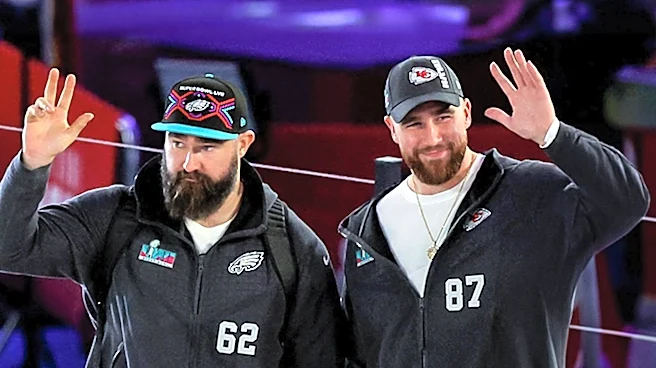
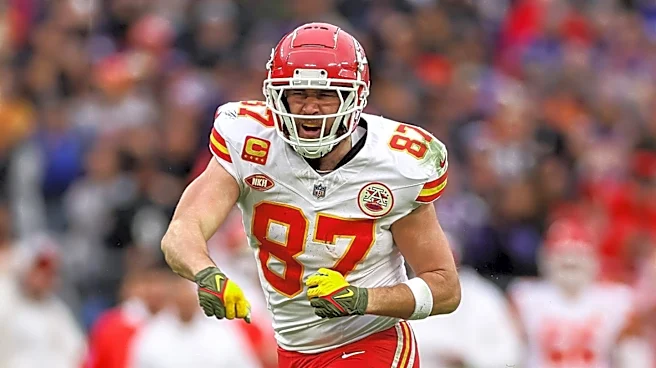
NFL players Travis and Jason Kelce have voiced their strong disapproval regarding the public sharing of NFL training camp practice footage. On their podcast, 'New Heights,' Jason Kelce stated his belief that practice should remain a private space for
players to experiment and refine their skills without the pressure of public scrutiny. This sentiment was echoed by Travis Kelce, who clarified that a viral clip showing him running a 'slow' route was a deliberate tactic to set up future moves, not an indication of declining ability. The brothers argue that these clips, often taken out of context, lead to unfair judgments and overreactions from fans on social media. They emphasize that practice is a developmental environment where players should feel free to try new things, even if they don't always work out, without the fear of those attempts being permanently documented and analyzed online.
Why It's Important?
The publicization of NFL practice footage raises significant questions about player privacy, performance evaluation, and the evolving relationship between professional sports and social media. For players, the ability to practice freely without constant public oversight is crucial for skill development and strategic experimentation. When every movement is subject to viral dissemination and immediate judgment, it can stifle creativity and risk-taking, potentially impacting on-field performance. For the NFL and its teams, managing the flow of information from training camps is a delicate balance between engaging fans and protecting the integrity of player development. The brothers' comments highlight a growing tension between the desire for transparency and access in the digital age and the need for a controlled environment where athletes can hone their craft away from public pressure. This issue could lead to discussions about new policies regarding media access to practices and the use of practice footage by teams and media outlets.
What's Next?
The Kelce brothers' public statements could prompt further dialogue within the NFL regarding the protocols for sharing practice footage. While no immediate policy changes have been announced, their comments may encourage other players to voice similar concerns, potentially leading to a review of current practices. Teams might consider implementing stricter guidelines on what footage is released and how it is contextualized to prevent misinterpretations. Media outlets and social media platforms may also face increased pressure to exercise caution and provide more context when sharing practice clips. This situation could also spark a broader conversation among sports leagues about balancing fan engagement with athlete well-being and the sanctity of training environments. It remains to be seen if these discussions will translate into concrete changes in how NFL practice footage is handled.
Beyond the Headlines
This issue extends beyond the immediate concerns of NFL players and touches upon broader themes of digital privacy and the impact of constant surveillance in public life. In an era where nearly every aspect of public figures' lives can be captured and shared online, the Kelce brothers' frustration reflects a desire for boundaries, even in professional settings. The 'practice is practice' argument underscores the importance of designated spaces for learning and growth, free from the performative pressures of public consumption. This situation highlights the ethical considerations of content creation and dissemination in the digital age, particularly when it involves individuals whose livelihoods are tied to public perception. It also prompts reflection on the role of social media in shaping narratives and the potential for decontextualized content to lead to misinformed public opinion, impacting not just athletes but anyone in the public eye.