








What's Happening?
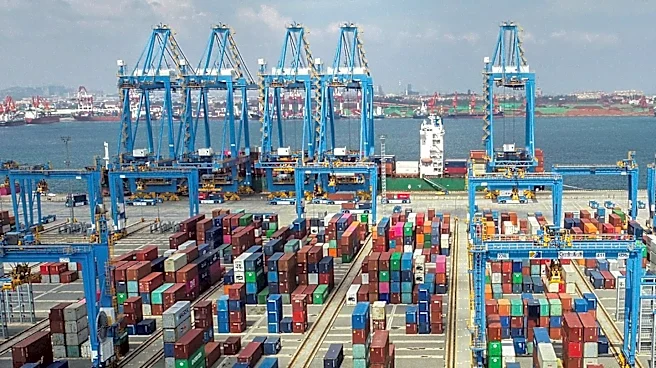
The U.S. maritime shipping and ports sector is experiencing substantial growth, propelled by increasing global maritime trade and the widespread adoption of smart port technologies. Ports are actively investing in advanced solutions such as automated
cranes, intelligent terminal operating systems, AI-based traffic management, and digital logistics platforms to efficiently handle rising cargo volumes and alleviate congestion. This technological integration aims to optimize operational efficiency and reduce turnaround times. Furthermore, the sector is aligning with the International Maritime Organization's (IMO) goal of achieving net-zero emissions from international shipping by 2050. This commitment is driving ports to implement shore power systems, integrate renewable energy sources, and develop carbon management platforms. The market for maritime safety systems is also expanding, with a focus on integrated technologies for navigation safety, collision prevention, vessel traffic awareness, and emergency response. The global Smart Ports Market is projected to reach USD 12.8 billion by 2036, growing from USD 4.3 billion in 2026, with significant contributions from the adoption of AI, IoT, and digital twin technologies, alongside government investments in smart port infrastructure.
Why It's Important?
The modernization of the U.S. maritime shipping and ports sector is crucial for national economic stability and global trade competitiveness. By adopting smart technologies, U.S. ports can enhance their capacity to manage increasing international trade volumes, which are the backbone of the global economy. Improved efficiency through automation and AI-driven systems will lead to faster cargo handling, reduced congestion, and lower operational costs, benefiting businesses and consumers through more streamlined supply chains. The focus on decarbonization, driven by IMO targets, positions U.S. ports to lead in sustainable maritime practices, potentially attracting more environmentally conscious shipping partners and fostering green technology innovation. This shift also addresses environmental concerns, as international shipping accounts for nearly 3% of global greenhouse gas emissions, with about 10% of these emissions generated within port areas. Investments in maritime safety systems are vital for protecting vessels, crews, and cargo, ensuring the continuous flow of goods and minimizing risks associated with maritime operations. The growth of this market also creates opportunities for technology providers and service industries, contributing to job creation and economic development within the U.S.
What's Next?
The U.S. maritime sector is expected to continue its trajectory towards greater digitalization and sustainability. Future developments will likely include further deployment of 5G-enabled smart ports, enhancing real-time communication and supporting autonomous operations. Increased investment in smart energy management systems will be critical to meet decarbonization goals, including expanding shore power infrastructure and integrating renewable energy. The transition towards autonomous port operations, utilizing AI-powered scheduling systems and autonomous cargo handling, will become more prevalent to improve efficiency and reduce labor dependency. Stakeholders, including port authorities, terminal operators, and shipping companies, will need to address challenges such as high capital investment requirements, integration with legacy infrastructure, and cybersecurity risks. Workforce transformation will also be a key focus, requiring reskilling existing employees and attracting talent with expertise in AI, cybersecurity, and industrial automation to manage these advanced systems. Continued collaboration between government agencies, technology providers, and industry players will be essential to navigate these changes and ensure the U.S. remains a leader in smart and sustainable maritime trade.
Beyond the Headlines
The transformation of U.S. maritime shipping and ports extends beyond immediate operational and economic benefits, touching upon deeper societal and environmental implications. The push for decarbonization and green port initiatives reflects a broader commitment to environmental stewardship, potentially setting new global standards for sustainable trade. This could influence international policy and encourage other nations to adopt similar practices, fostering a more environmentally responsible global supply chain. The increasing reliance on AI and automation raises ethical questions regarding job displacement and the need for robust social safety nets and retraining programs for affected workers. Furthermore, the enhanced digital connectivity of smart ports introduces complex cybersecurity challenges, making critical infrastructure vulnerable to sophisticated attacks. Protecting these systems will require continuous innovation in cybersecurity measures and international cooperation to safeguard global trade flows. The development of digital twin technology, which creates virtual representations of port infrastructure, could revolutionize urban planning and disaster preparedness in coastal areas, allowing for better simulation and response to environmental changes and operational disruptions.