




What's Happening?
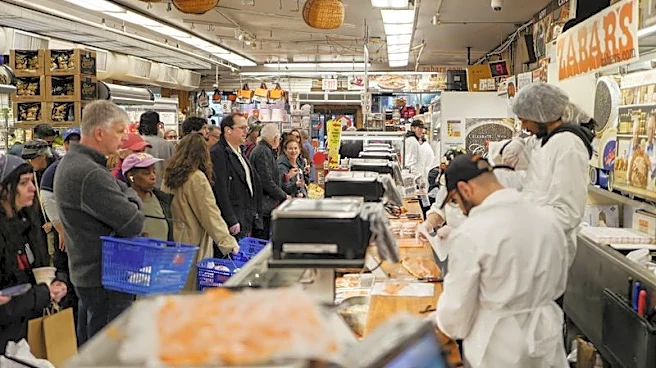
In October, the U.S. retail seafood market continued to experience significant inflationary trends, impacting fresh and frozen seafood sales by volume, while shelf-stable options demonstrated resilience. According to Circana data analyzed by 210 Analytics,
fresh seafood's average price per unit increased by 4.1 percent to $10.84, and frozen seafood prices rose nearly 8 percent to an average of $11.66 per unit. Ambient seafood saw an even sharper price increase of 15.4 percent, reaching $2.68 per unit. These price hikes led to an increase in sales by value for both fresh and frozen seafood, with fresh sales rising 1.7 percent to $777 million and frozen sales spiking 5.4 percent to $768 million. However, sales by volume for fresh and frozen seafood dropped by 2.1 percent and 2.7 percent, respectively. Shelf-stable seafood, despite heavy inflation, was the fastest-growing segment, with sales by value increasing 17.7 percent year over year to $389 million and sales by volume rising 5.9 percent. Ambient tuna remained the top seller in this category, while sardines experienced the highest value growth rate at over 35 percent.
Why It's Important?
The ongoing inflation in the U.S. seafood market highlights a broader economic challenge affecting American consumers and the retail industry. The shift in consumer purchasing behavior towards more affordable, shelf-stable seafood options, despite rising prices in that category as well, indicates a strategic adaptation to economic pressures. This trend suggests that consumers are prioritizing value and budget-friendly alternatives, which could have long-term implications for the demand and supply chains of fresh and frozen seafood. For retailers, understanding these shifts is crucial for inventory management, pricing strategies, and marketing efforts. The resilience of shelf-stable seafood sales, particularly ambient tuna and sardines, points to a segment that can withstand inflationary pressures more effectively, potentially due to its perceived value and longer shelf life. Conversely, the decline in volume sales for fresh and frozen seafood, despite value increases, signals a potential contraction in consumer access or willingness to pay higher prices for these products, which could impact the profitability of suppliers and distributors in those segments.
What's Next?
As inflation continues to present challenges for American shoppers, the seafood retail market is likely to see continued adjustments in consumer preferences and industry strategies. The U.S. Consumer Price Index (CPI) indicated a 0.4 percent increase in food-at-home inflation in October, suggesting that these price pressures are not abating. The FMI – The Food Industry Association Vice President of Tax, Trade, Sustainability, and Policy Development, Andy Harig, noted that rising energy costs, a critical input at every stage of the food system, will continue to be reflected in grocery prices. This implies that seafood prices, particularly for energy-intensive fresh and frozen products, may remain elevated. Retailers and seafood suppliers will need to monitor consumer sentiment closely, as Numerator's October 2026 Economic Sentiment Tracker revealed that 42 percent of U.S. consumers identified rising prices as their top concern for the coming year. This concern could further drive demand for more economical seafood options and potentially lead to innovations in product offerings and packaging to meet evolving consumer needs.
Beyond the Headlines
The sustained inflation in the seafood market, particularly the divergence between value and volume sales for fresh and frozen products versus the growth in shelf-stable options, reflects a deeper economic narrative of consumer belt-tightening and a search for value. This trend extends beyond seafood, as prices for everyday household goods rose 0.6 percent in October, following a similar incline in September, and are up 34.9 percent since January 2018. The increasing consumer concern about rising prices, reaching a record high, underscores a broader economic anxiety that influences purchasing decisions across various sectors. This situation could lead to a re-evaluation of consumer staples and luxury goods, potentially accelerating the adoption of private-label brands or more budget-friendly alternatives. The long-term implications could include a permanent shift in consumer habits, where value and shelf life become more significant factors in food choices, potentially reshaping the entire food retail landscape and challenging traditional market segments.