


What's Happening?
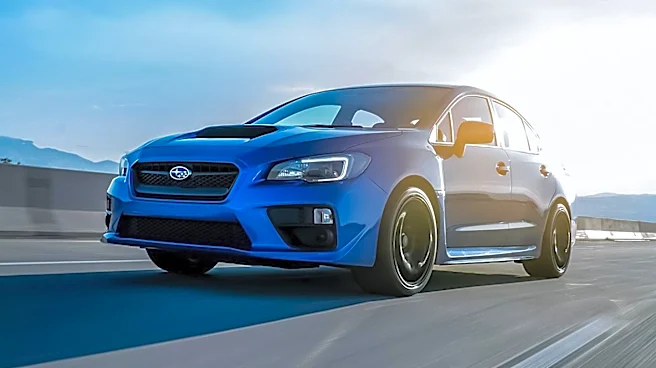
Subaru of America has reported a substantial increase in sales for its WRX model, with a 214.7% rise in July 2026 compared to the previous year. This surge is attributed to strategic pricing adjustments, including the reintroduction of a base model priced
at $32,495, making it $5,255 cheaper than the previous year's model. Additionally, Subaru reduced prices across the WRX range by $2,710 to $4,000. This pricing strategy has revitalized interest in the WRX, which had previously faced criticism for being overpriced and underpowered. The Forester model also saw a 33.5% increase in sales, maintaining its position as Subaru's bestselling model for the seventh consecutive month. However, the Impreza model experienced a significant decline, with sales dropping by nearly 40%.
Why It's Important?
The resurgence in WRX sales highlights the impact of strategic pricing on consumer demand, particularly in the competitive automotive market. Subaru's ability to adapt its pricing strategy has not only revived interest in the WRX but also demonstrates the importance of affordability in driving sales. This trend is significant as it reflects broader market dynamics where consumers are increasingly prioritizing value and performance. The success of the WRX and Forester models underscores Subaru's strong positioning in the performance and SUV segments, respectively. However, the decline in Impreza sales indicates potential challenges in the compact car market, where consumer preferences may be shifting towards more performance-oriented models.
What's Next?
Subaru's continued focus on strategic pricing and model differentiation is likely to influence its market performance in the coming months. The company may explore further enhancements to its model lineup to capitalize on the growing interest in performance and SUV vehicles. Additionally, Subaru's approach could prompt competitors to reevaluate their pricing and marketing strategies to maintain competitiveness. The automotive industry will be closely watching Subaru's next moves, particularly in the context of evolving consumer preferences and economic conditions.