




What's Happening?
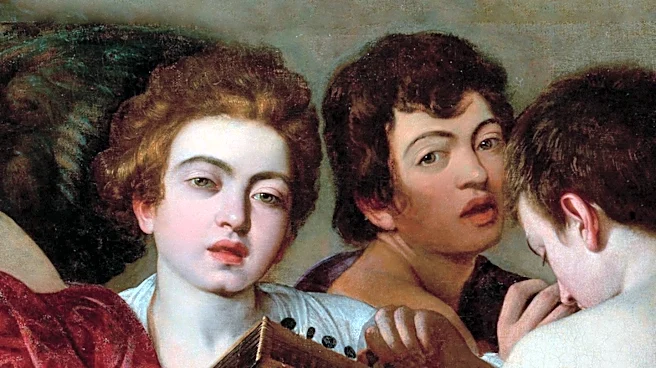
Brad Miner, Senior Editor of The Catholic Thing and a Senior Fellow of the Faith & Reason Institute, has published an article discussing Caravaggio’s painting, 'The Incredulity of St. Thomas.' Miner identifies this work as the greatest painting in his opinion,
commissioned by Vincenzo Giustiniani, a banker and patron of the arts. The article delves into the biblical moment depicted, where Thomas doubts the resurrection of Christ until he physically touches Jesus' wounds. Miner highlights Caravaggio's use of tenebrism and his portrayal of real people experiencing profound spiritual moments, emphasizing the physicality of faith and doubt. He also notes the presence of Peter and John in the painting, suggesting a deeper theological interpretation of their roles in relation to Thomas's proclamation of faith.
Why It's Important?
Brad Miner's analysis of 'The Incredulity of St. Thomas' is important for U.S. religious and art communities as it offers a detailed theological and artistic interpretation of a significant work of Christian art. For religious scholars and practitioners, it provides insights into the biblical narrative of doubt and faith, and how it has been visually interpreted through history. For art historians and enthusiasts, Miner's perspective enriches the understanding of Caravaggio's technique, patronage, and the cultural context of the Baroque period. The discussion of the painting's themes, such as embodiment and the nature of belief, resonates with contemporary discussions on faith, skepticism, and the role of art in spiritual expression. It also underscores the enduring influence of classical art on modern thought and spirituality, encouraging a deeper engagement with historical religious narratives.
Beyond the Headlines
Beyond the immediate art historical and theological discussion, Brad Miner's piece on 'The Incredulity of St. Thomas' touches upon broader cultural and philosophical themes relevant to U.S. society. The painting's depiction of doubt and the need for tangible proof before belief speaks to a persistent human condition, echoing contemporary debates between faith and reason. In a society increasingly reliant on empirical evidence, the story of 'doubting Thomas' and Caravaggio's visceral portrayal offers a powerful counter-narrative about the nature of conviction and spiritual experience. The article also implicitly highlights the role of art patronage in shaping cultural and religious narratives, a practice that continues today through various forms of artistic funding and support. Furthermore, Miner's personal connection to the painting underscores the subjective yet profound impact art can have on individual spiritual journeys.