







What's Happening?
Firmus Technologies has announced a significant 12-year energy supply agreement with Gunvor Group, securing 600 MW of firm electricity to support its AI Factory campuses in South Australia. This agreement is part of Firmus' Project Southgate, which aims
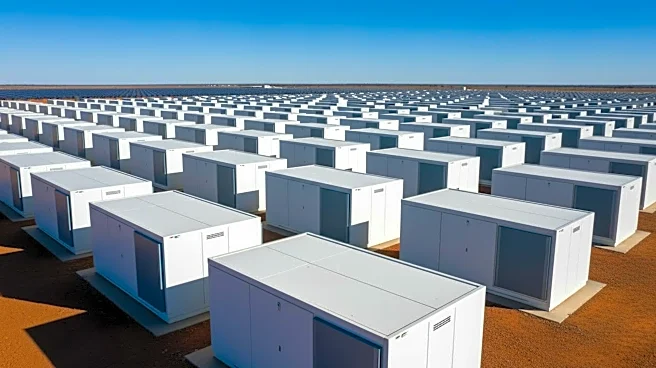
to develop large-scale AI infrastructure across regional Australia. The deal includes the development of 1.2 GW of new renewable energy generation and 1.5 GWh of battery storage by 2032. Additionally, Firmus has committed to a demand response strategy, reducing electricity consumption during peak periods to alleviate grid stress. This initiative is expected to bring long-term investment and skilled employment to South Australia, leveraging the region's renewable energy resources and existing transmission capacity.
Why It's Important?
The agreement underscores South Australia's leadership in the clean energy transition, attracting future industries like AI and digital infrastructure. By investing in renewable energy and battery storage, Firmus is not only supporting its AI infrastructure but also contributing to the stability and sustainability of the regional electricity grid. This development is poised to create new jobs and investment opportunities, enhancing the economic landscape of regional South Australia. The strategic partnership with Gunvor Group highlights the potential for long-term customer demand to drive renewable energy supply and infrastructure development, setting a precedent for similar models in the future.
What's Next?
Firmus Technologies plans to continue its expansion in South Australia, with the first phase of its AI Factory campuses at Tailem Bend and Stirling North. These projects are expected to deliver lasting benefits to local communities, including infrastructure development and job creation. As the AI and digital infrastructure sectors grow, Firmus' model of integrating renewable energy and flexible energy use could become a blueprint for future developments. Stakeholders, including local governments and industry leaders, will likely monitor the project's progress and its impact on the regional economy and energy landscape.